Secure identity artifact recovery, blockchain-style audit trails, consent-based records, AI Vision recovery, form prefill, and trusted workflows for people who may not be able to carry physical documents.
The concept focuses on helping people access critical identity artifacts without carrying every physical document. A secure identity wallet can hold encrypted references to artifacts, while blockchain-style hashes provide proof, traceability, and tamper-evident audit history. AI Vision can help recover access by matching the person, but sensitive data remains protected and controlled through consent, encryption, and access rules.
The screenshots below are packaged locally with this page so they render reliably. They show identity vaults, AI Vision recovery, government form prefill, case worker artifact retrieval, consent audit trails, and architecture.
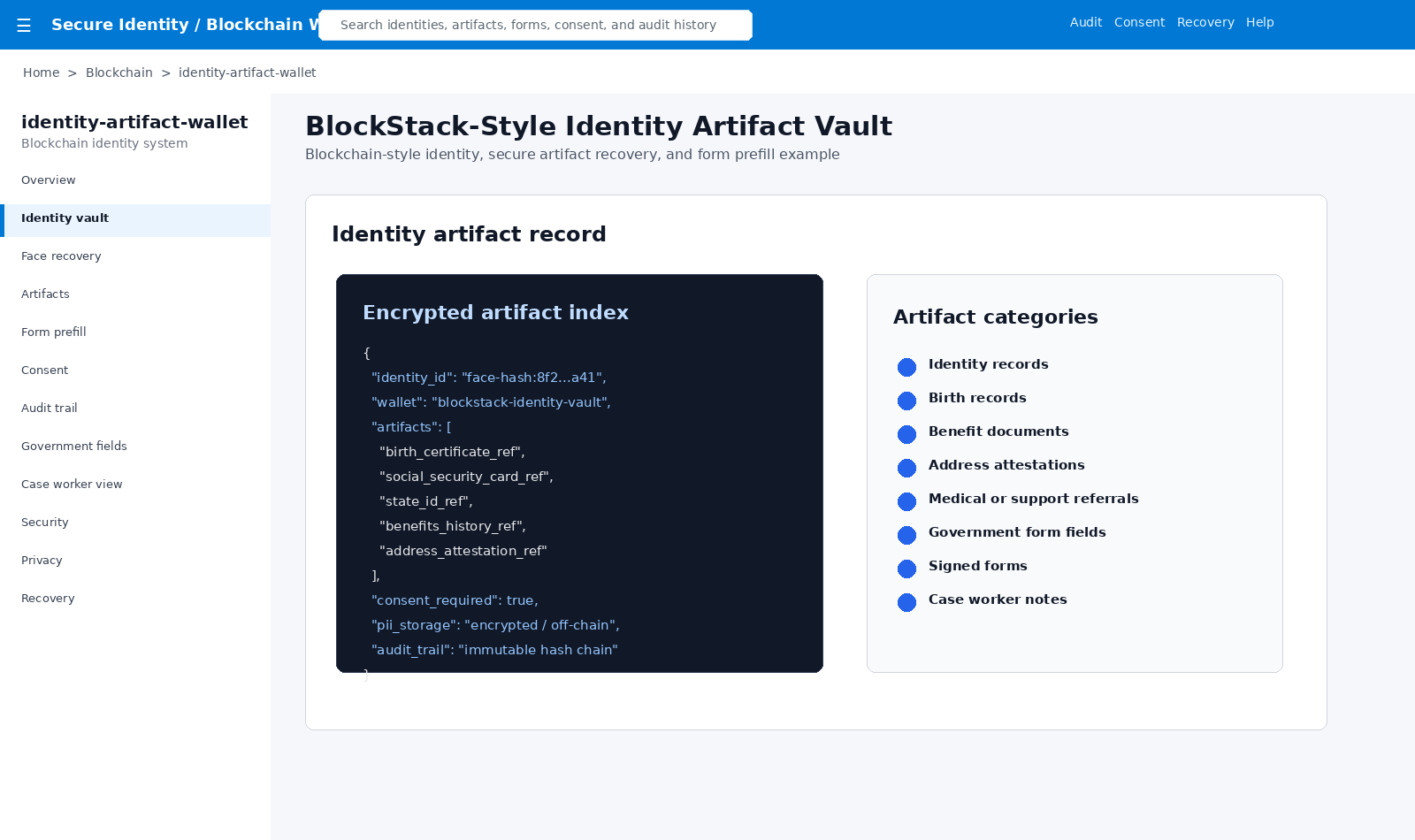
Encrypted artifact references protect identity documents while blockchain-style hashes preserve traceability and proof.
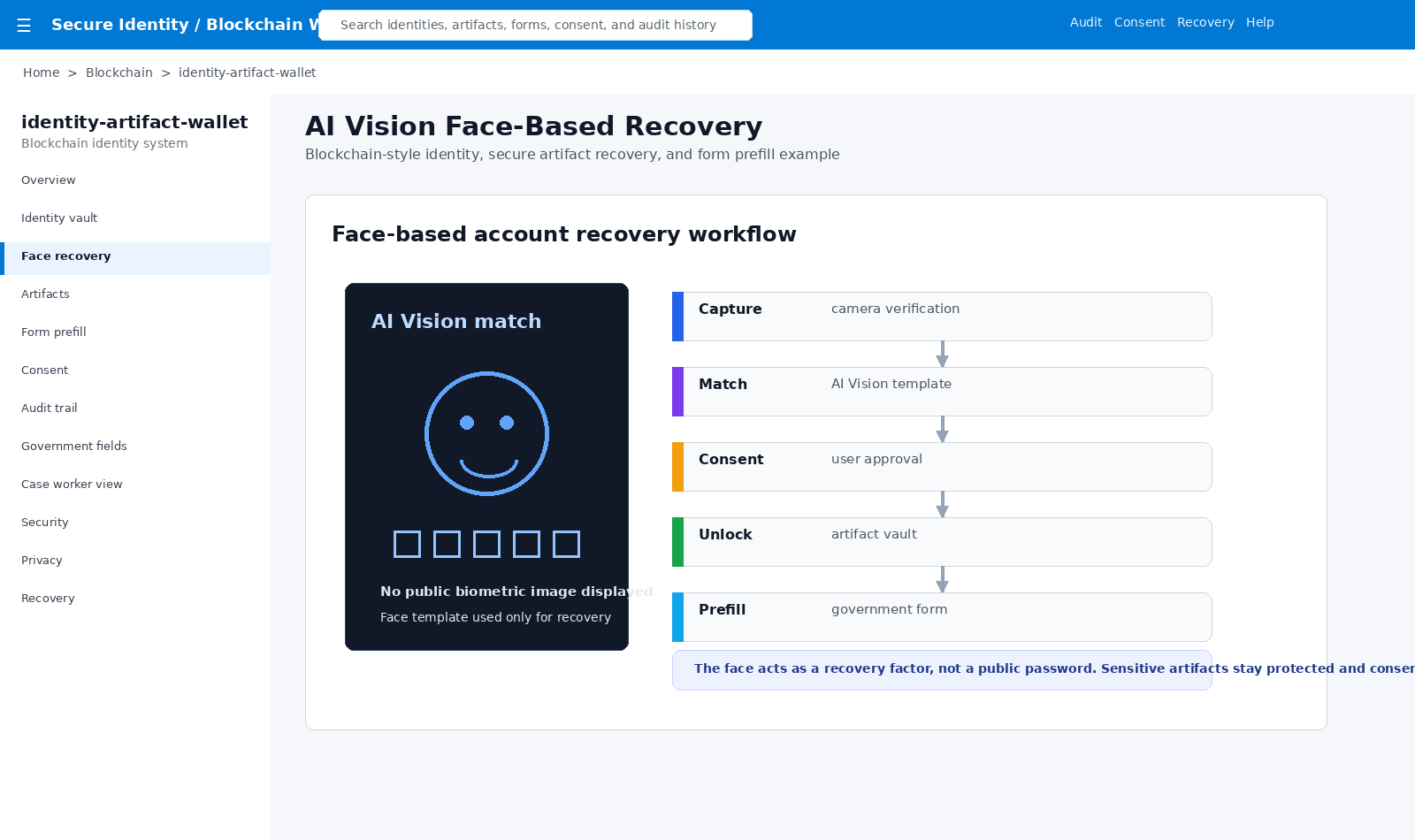
Face matching can help recover access to the protected identity vault without exposing the person’s artifacts publicly.
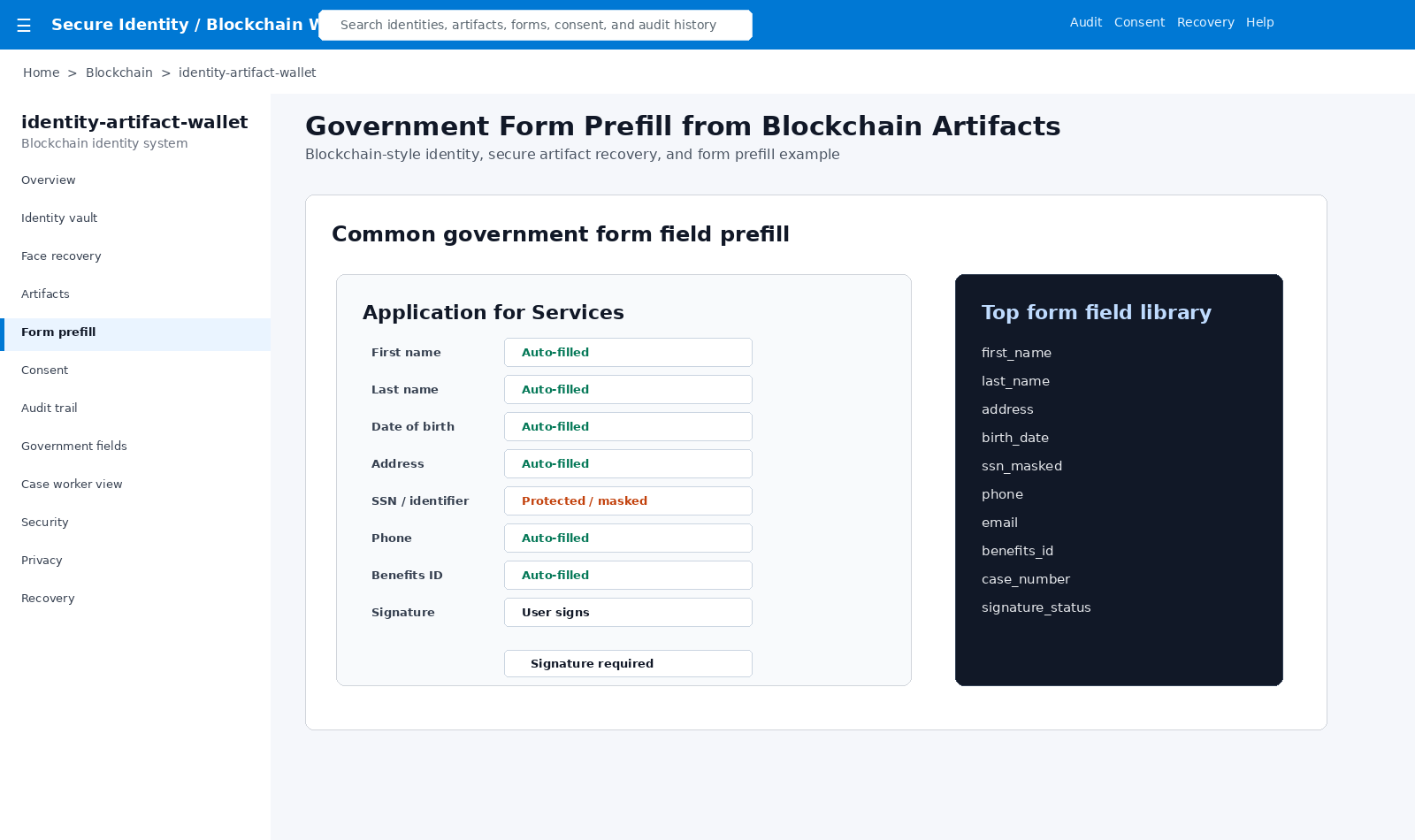
Common fields such as name, address, birth date, masked SSN, phone, benefits ID, and case number can be prefilled.
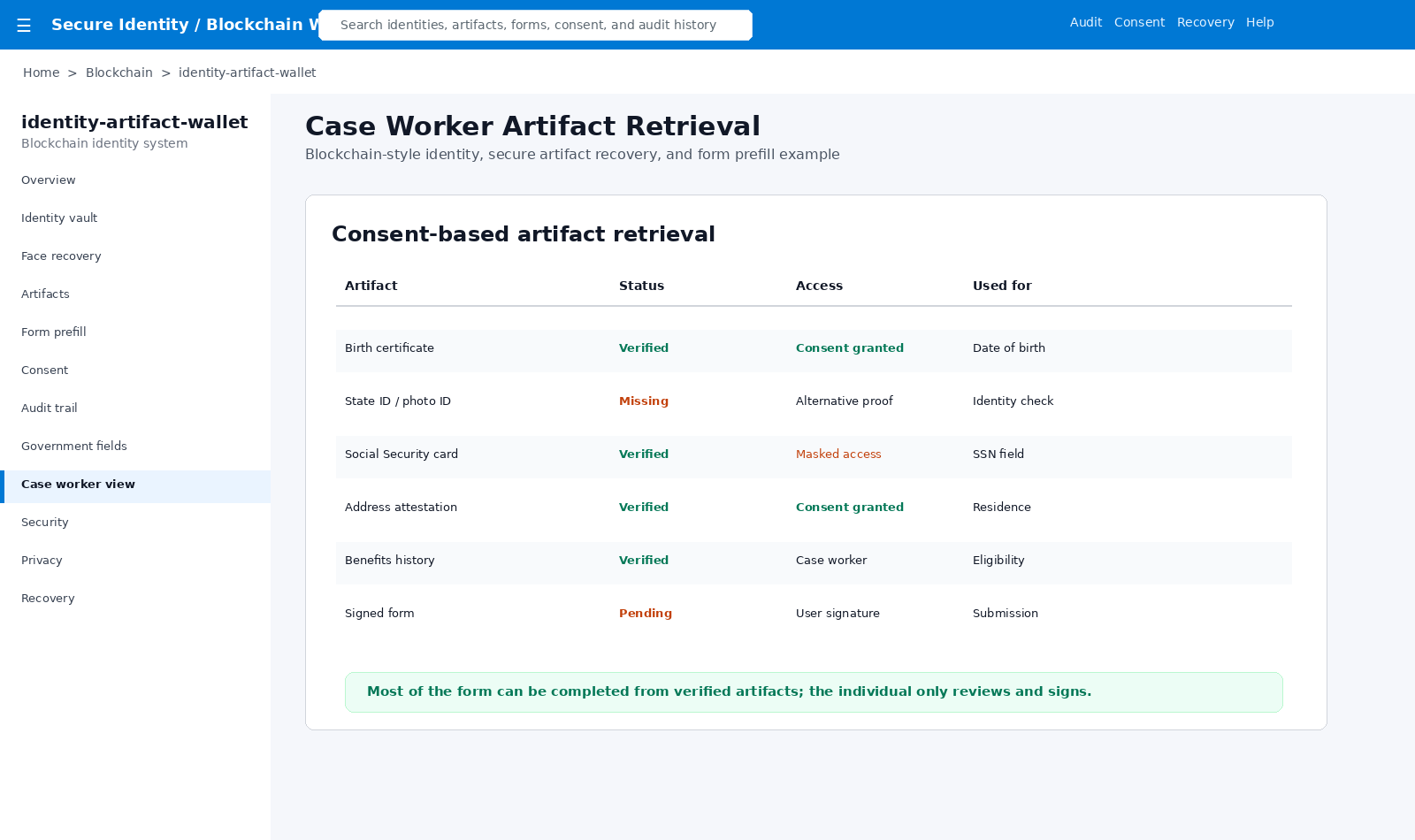
Case workers can retrieve consent-approved artifacts so most of a form is completed before the individual signs.
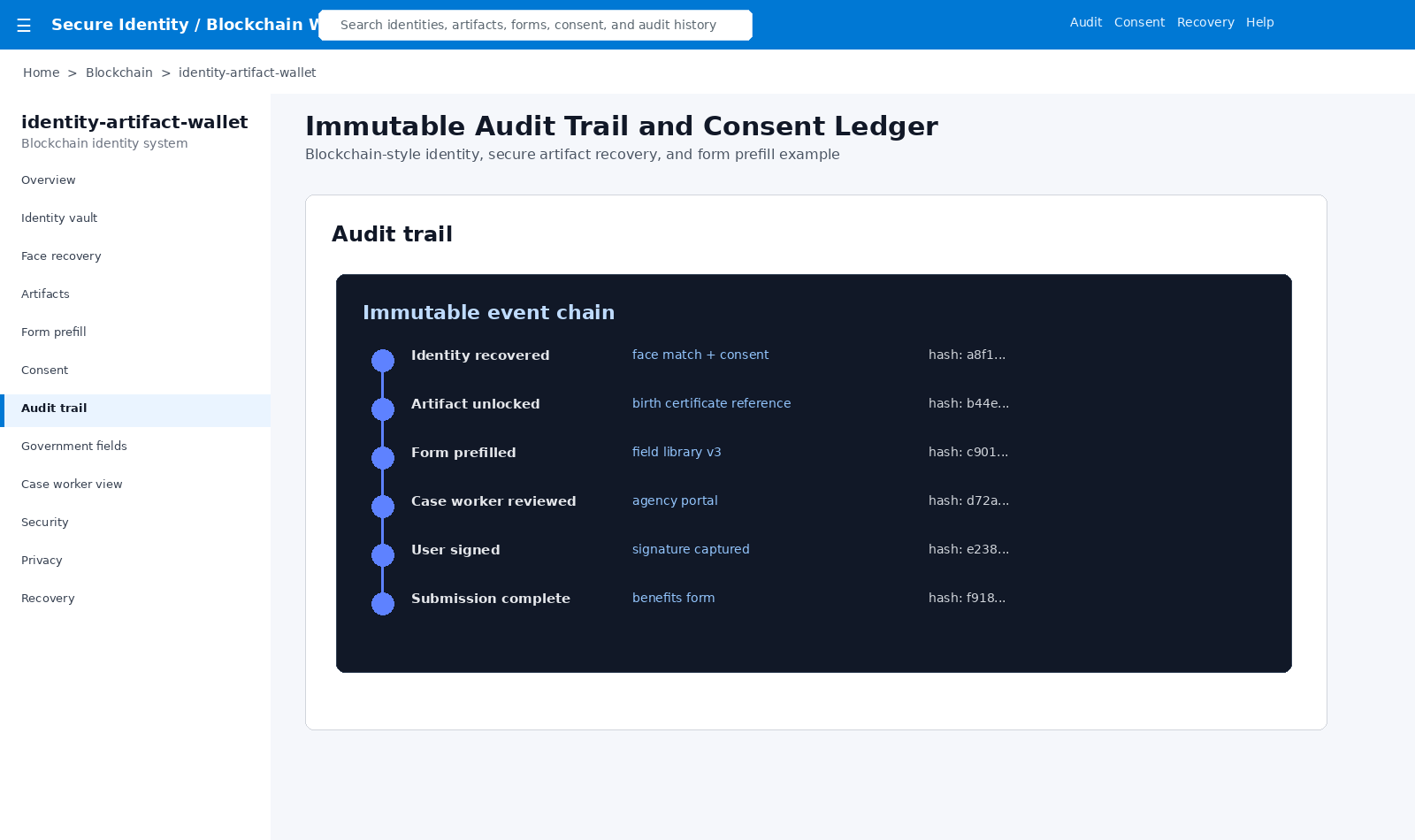
Access, artifact use, prefill events, review, signature, and submission are captured in an immutable audit trail.
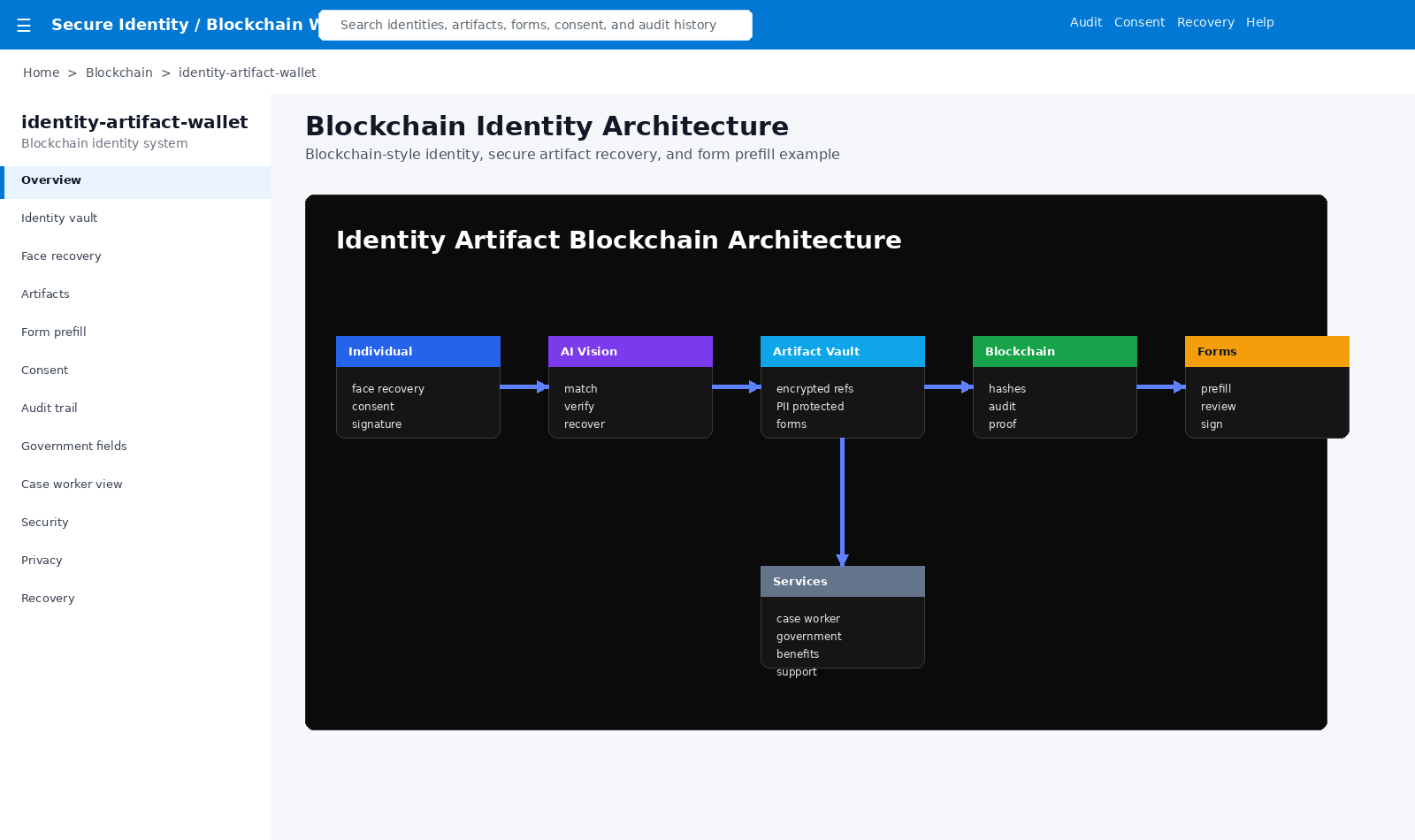
Individual, AI Vision, artifact vault, blockchain hashes, forms, and services work together securely.
Uses face recovery, consent, review, and signature instead of carrying every document.
Verifies identity recovery using protected templates and confidence thresholds.
Stores encrypted references to identity documents, records, and verified fields.
Records hashes, consent events, access logs, and tamper-evident proof.
Prefills common government form fields and leaves final review and signature to the person.
This pattern helps reduce the burden on individuals who cannot reliably carry or preserve physical documents. It can support faster form completion while protecting sensitive data through consent, encryption, masking, and audit trails.