Evolvement LLC logo

Training

Hands-on enablement for cloud, data, automation, AI, DevSecOps, dashboards, testing, agile delivery, train-the-trainer, train-the-users, and modern Microsoft platform capabilities.

What We Build

  • Role-based training programs for executives, analysts, engineers, operators, trainers, administrators, and end users.
  • Agile testing enablement with user stories, acceptance criteria, test scripts, UAT, regression tests, and release validation.
  • Azure DevSecOps training covering pipelines, security scans, approvals, release gates, evidence collection, and production readiness.
  • Train-the-trainer and train-the-users programs that create repeatable internal capability, not one-time exposure.
  • Training artifacts including written guides, screenshots, videos, podcasts, labs, job aids, quick cards, and interactive exercises.

Example Use Cases

  • Prepare teams to test Power Apps, APIs, SQL updates, dashboards, automations, and AI outputs before production release.
  • Train internal champions to support future users and maintain long-term adoption.
  • Deliver small group workshops, large web conferences, live demos, and hands-on practice labs.
  • Use experiential, kinetic, interactive, visual, written, video, and audio learning methods for different learner needs.
  • Create test scripts and training evidence that support DevSecOps release governance.

Training Approach

Evolvement LLC training is designed around adoption, testing, and operational readiness. The goal is not just to explain a system, but to help users practice real scenarios, validate outcomes, understand workflows, and confidently operate the solution.

  • Agile Testing: user stories, acceptance criteria, test scripts, UAT sessions, regression checks, and evidence capture.
  • DevSecOps: pipeline awareness, security checks, approval gates, deployment validation, and release readiness.
  • Train-the-Trainer: enable internal champions to teach, reinforce, troubleshoot, and sustain adoption.
  • Train-the-Users: role-based walkthroughs, practical exercises, job aids, and feedback loops.
  • Multi-Mode Learning: written, image-based, video, podcast, experiential, kinetic, interactive, small-group, and large-group formats.

Training Examples and Learning Area

This page is ready for downloadable test scripts, training videos, screenshots, train-the-trainer decks, learner guides, podcasts, labs, web conference recordings, and user feedback examples.

The screenshots below are packaged locally with this page so they render reliably.
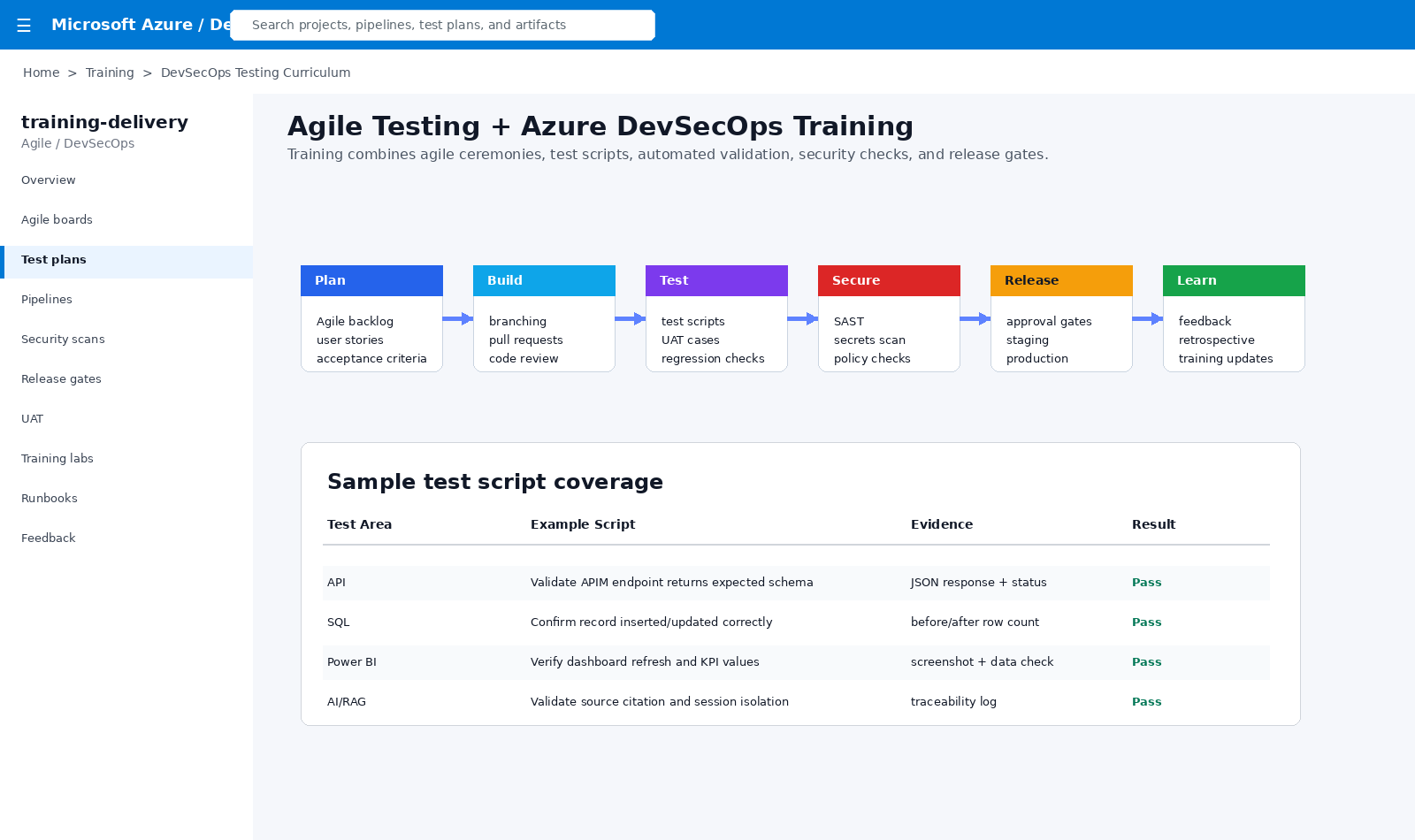
Azure DevSecOps agile testing and test scripts

Agile Testing and DevSecOps

Training covers agile boards, test plans, automated validation, security scans, UAT, release gates, and evidence collection.
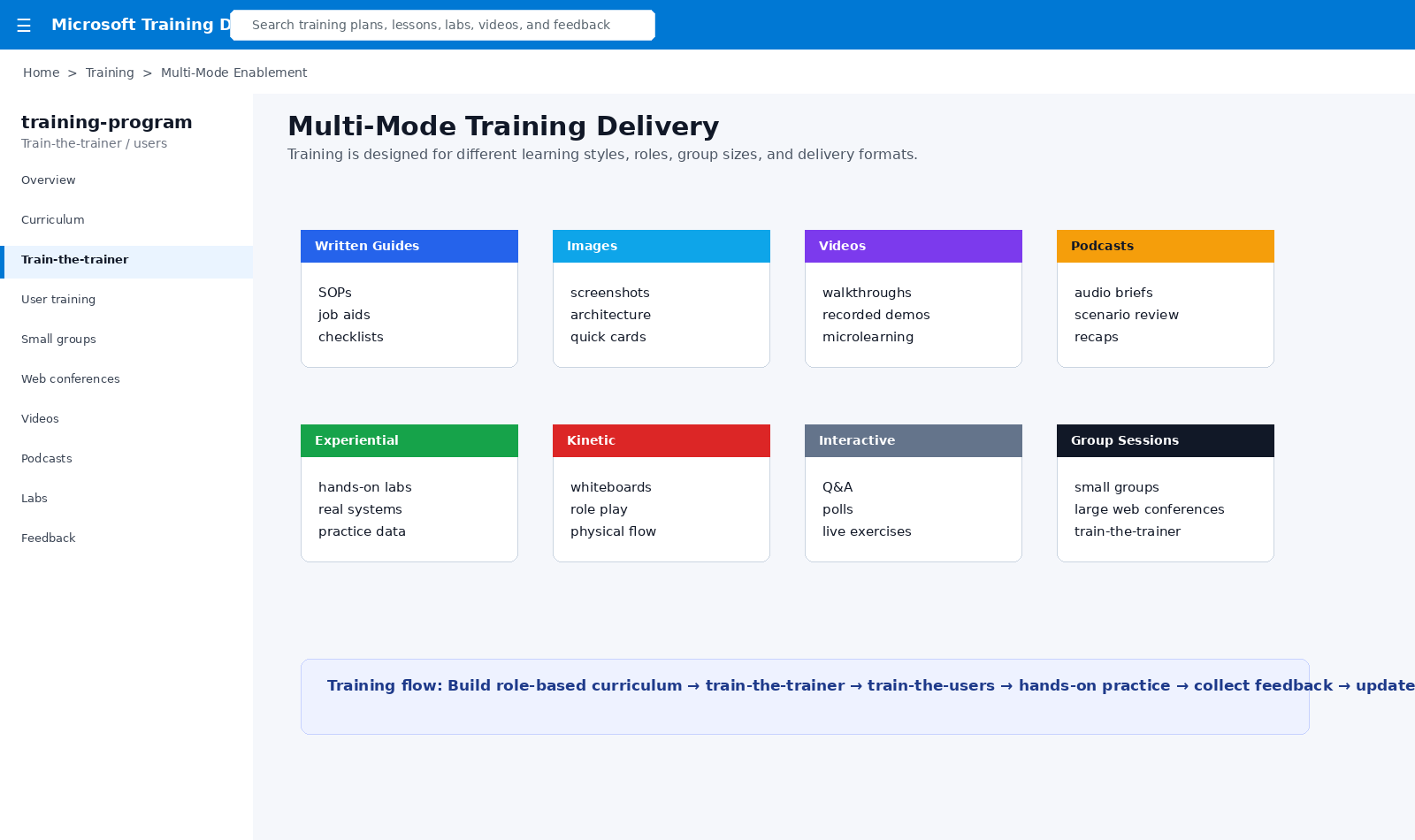
Multi-mode training delivery

Multi-Mode Training Delivery

Training supports written guides, images, videos, podcasts, hands-on labs, kinetic exercises, interactive sessions, small groups, and large web conferences.

Training Flow

Plan

Roles, outcomes, learning objectives, user stories, and acceptance criteria.

Build

Guides, scripts, labs, screenshots, videos, podcasts, and exercises.

Validate

Agile testing, UAT, security checks, release gates, and evidence.

Train

Train-the-trainer, train-the-users, small groups, and web conferences.

Adopt

Practice, feedback, reinforcement, job aids, and continuous improvement.

This pattern ensures users do not just receive information. They practice tasks, validate system behavior, understand the release process, and build confidence using the tools in real operational scenarios.

Business Value

  • Better adoption because training is role-based, practical, and tied to real work.
  • Reduced risk because test scripts and UAT validate system behavior before release.
  • More sustainable capability through train-the-trainer programs and reusable materials.
  • Improved DevSecOps maturity through pipeline, security, testing, and release awareness.
  • More inclusive learning through multiple formats and delivery modes.

Example Production Flow

  • Define user roles and training objectives.
  • Create test scripts, screenshots, guides, videos, and exercises.
  • Run agile testing and collect evidence for release readiness.
  • Train internal trainers first, then train end users by role.
  • Collect feedback and update materials, job aids, and test scripts.
Back to Capabilities