Evolvement LLC logo

Data Integration

Integration of structured data, unstructured content, API feeds, files, streams, narrative feedback, vector scoring, database logic, and dashboards into unified environments for trusted analytics, ML predictions, and persistent learning.

What We Build

  • Azure SQL integration layers for structured facts, parent/child records, history tables, audit logs, stored procedures, triggers, and reporting views.
  • Cosmos DB patterns for unstructured data such as uploaded files, streams, RSS feeds, narrative feedback, session metadata, and JSON records.
  • PostgreSQL vector data stores for embeddings, x/y/z scoring, similarity search, recommendation ranking, and persistent learning.
  • Data movement through APIs, Data Factory, automations, App Services, notebooks, and scheduled processing.
  • Integrated models that connect source data to dashboards, decision tables, ML Studio predictions, and AI agents.

Example Use Cases

  • Collect API data and land it into Azure SQL for historical dashboards and operational reporting.
  • Store unstructured files, streams, RSS feeds, and narrative user feedback in Cosmos DB for flexible retrieval.
  • Generate embeddings and vector scores in PostgreSQL to support search, matching, recommendations, and RAG.
  • Use stored procedures, triggers, and views to standardize business logic and produce reliable dashboard datasets.
  • Maintain parent/child relationships across source records, documents, events, scores, predictions, and audit history.

Integrated Data Foundation

Data integration is the foundation that makes dashboards, automation, ML, AI agents, and persistent learning possible. Evolvement LLC designs data environments where structured records, unstructured content, vector data, and business logic work together instead of living in disconnected systems.

  • Azure SQL: authoritative relational storage for reporting tables, history, views, procedures, triggers, and parent/child relationships.
  • Cosmos DB: flexible JSON storage for unstructured content, uploaded files, streams, RSS feeds, extracted text, and narrative feedback.
  • PostgreSQL: vector scoring, embeddings, x/y/z coordinates, similarity search, confidence scores, and recommendation ranking.
  • Business Logic: stored procedures, triggers, and views convert raw data into trusted reporting, decision, and ML-ready outputs.
  • Analytics and Learning: Power BI, ML Studio, AI agents, dashboards, alerts, and persistent learning all consume the integrated data layer.

Interactive Examples and Learning Area

This page is ready for future demos showing SQL query examples, Cosmos JSON records, PostgreSQL vector search, parent/child diagrams, stored procedures, triggers, views, dashboard datasets, and ML scoring pipelines.

The sample screenshots below are included in this package, so they will render directly from your website without relying on external image links.
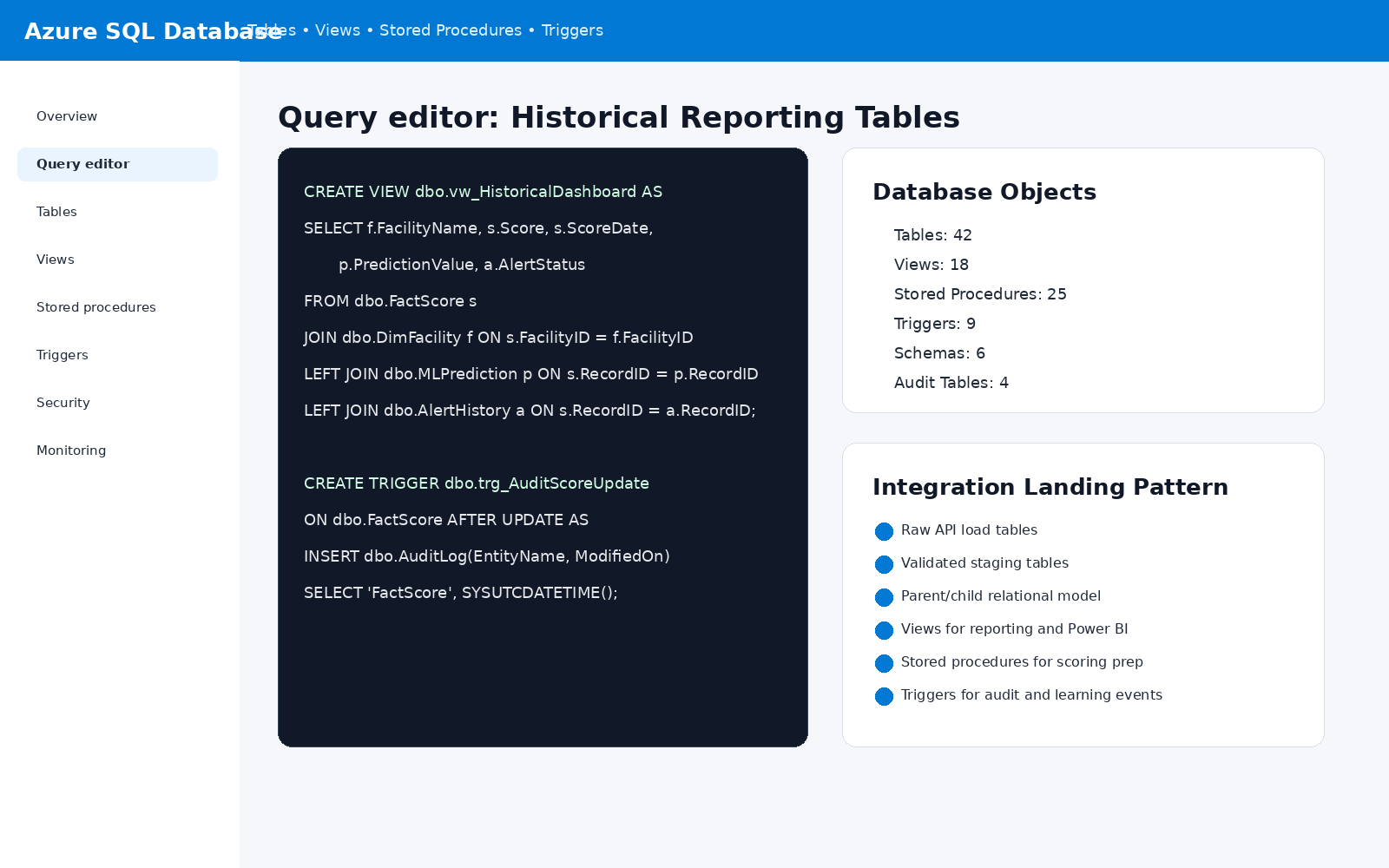
Azure SQL integration screenshot

Azure SQL: Structured Data Layer

Structured SQL tables, reporting views, stored procedures, and triggers support historical dashboards, audit logging, and ML-ready datasets.
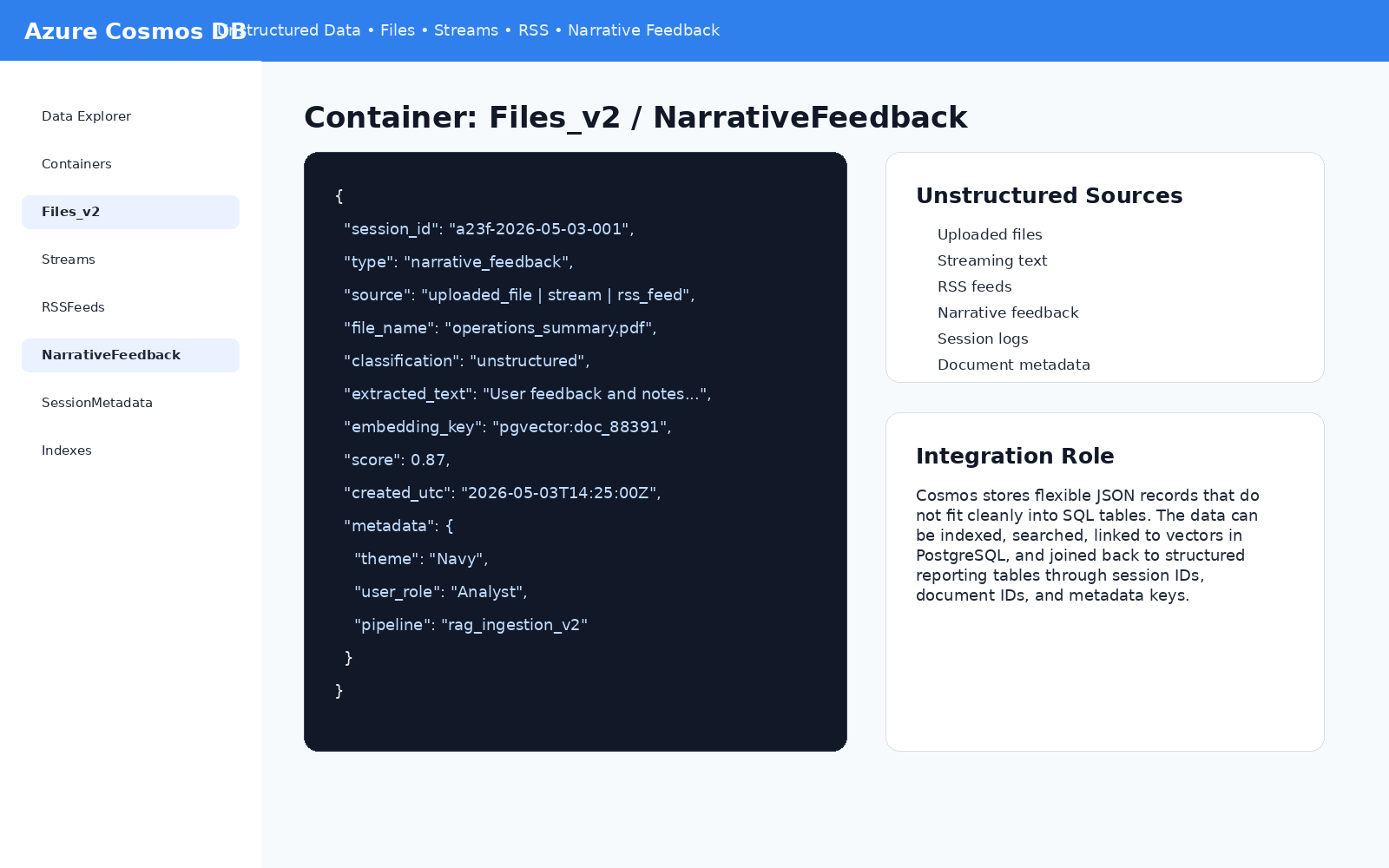
Cosmos DB unstructured data screenshot

Cosmos DB: Unstructured Data

Cosmos stores files, streams, RSS feeds, narrative feedback, extracted text, metadata, and session records as flexible JSON documents.
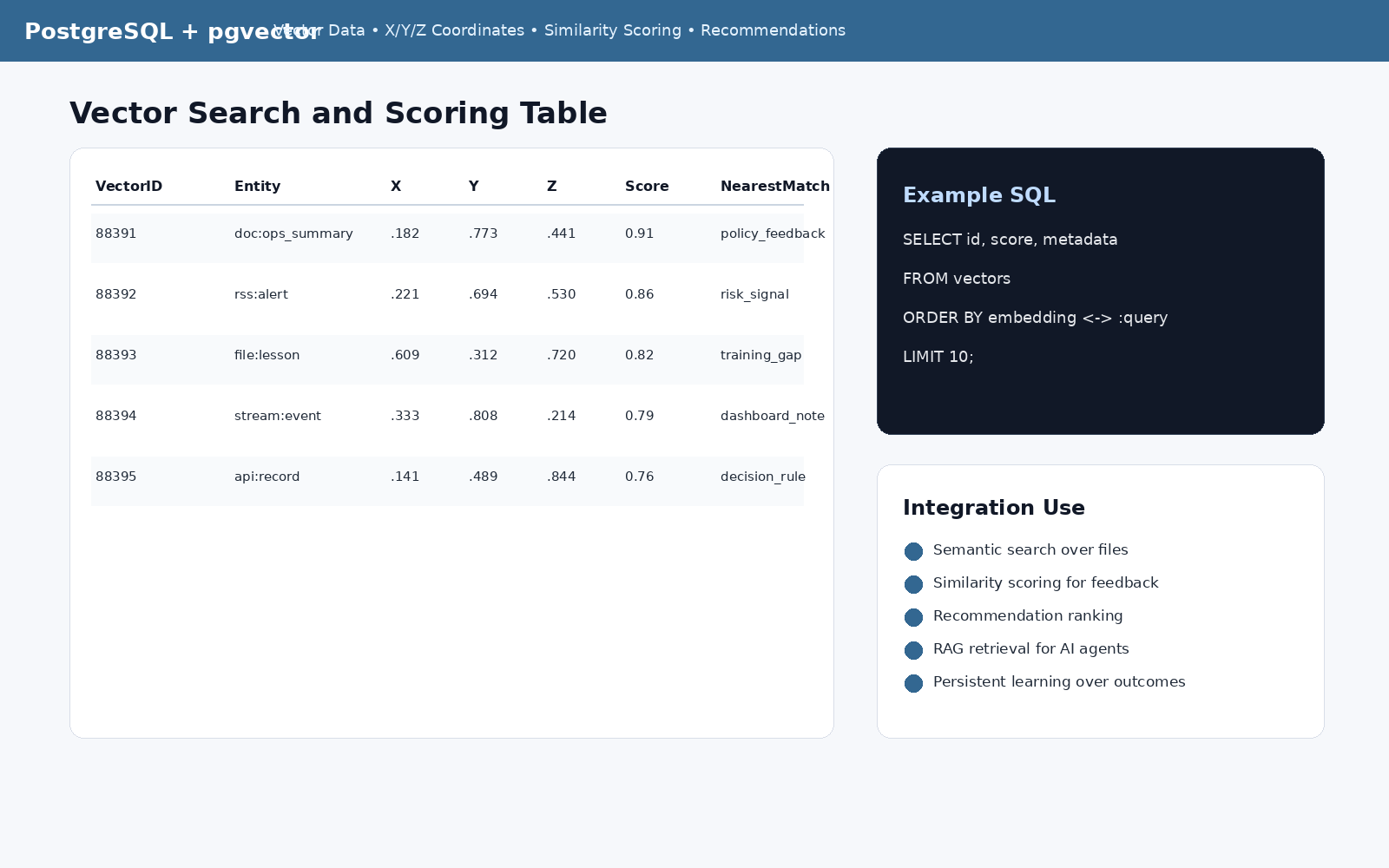
PostgreSQL vector scoring screenshot

PostgreSQL: Vector Data and Scoring

PostgreSQL with vector data supports x/y/z scoring, similarity search, retrieval, ranking, recommendations, and persistent learning.
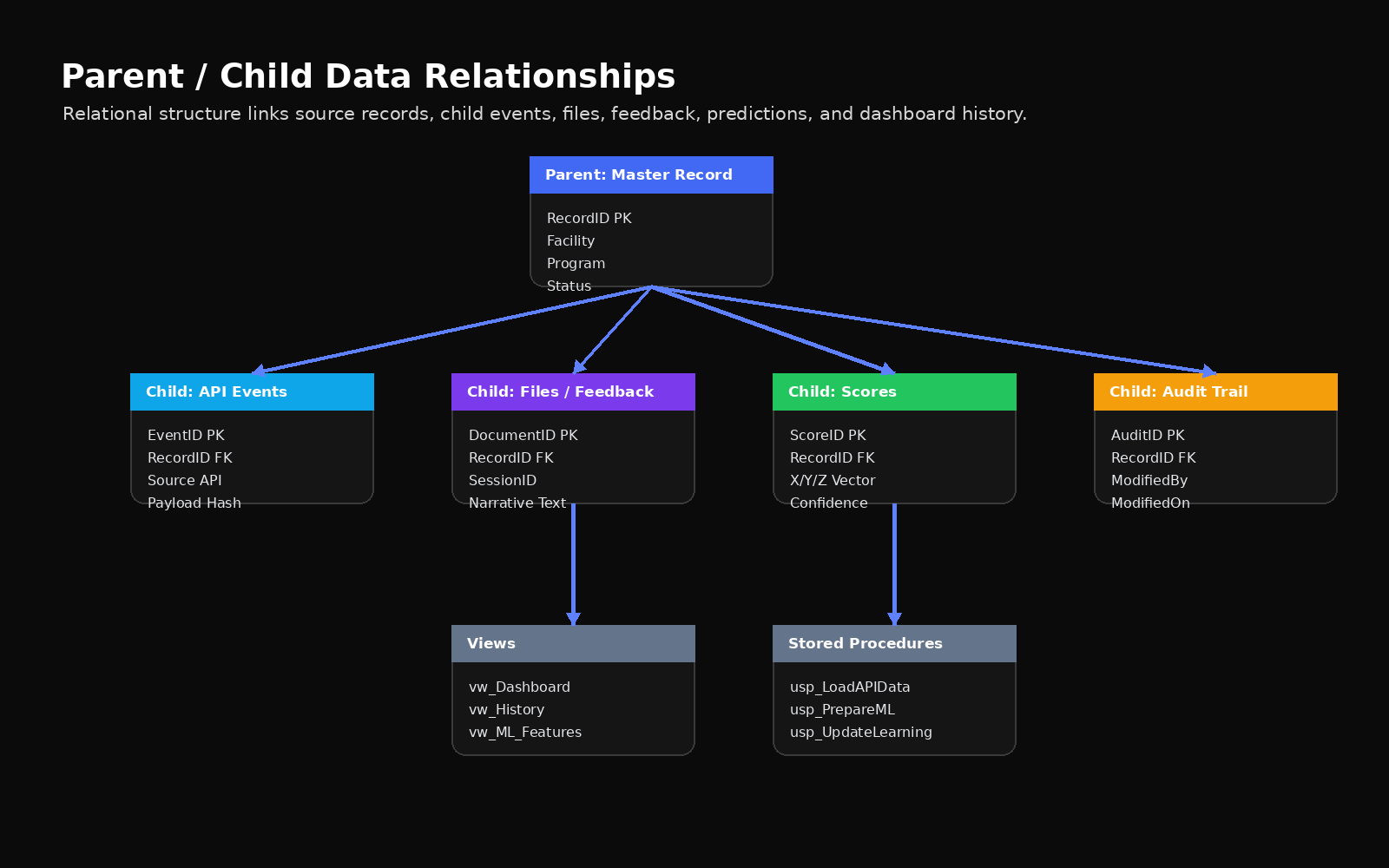
Parent child relationship architecture drawing

Parent / Child Relationships

Source records are linked to child events, files, feedback, scores, predictions, views, procedures, triggers, and audit trails.
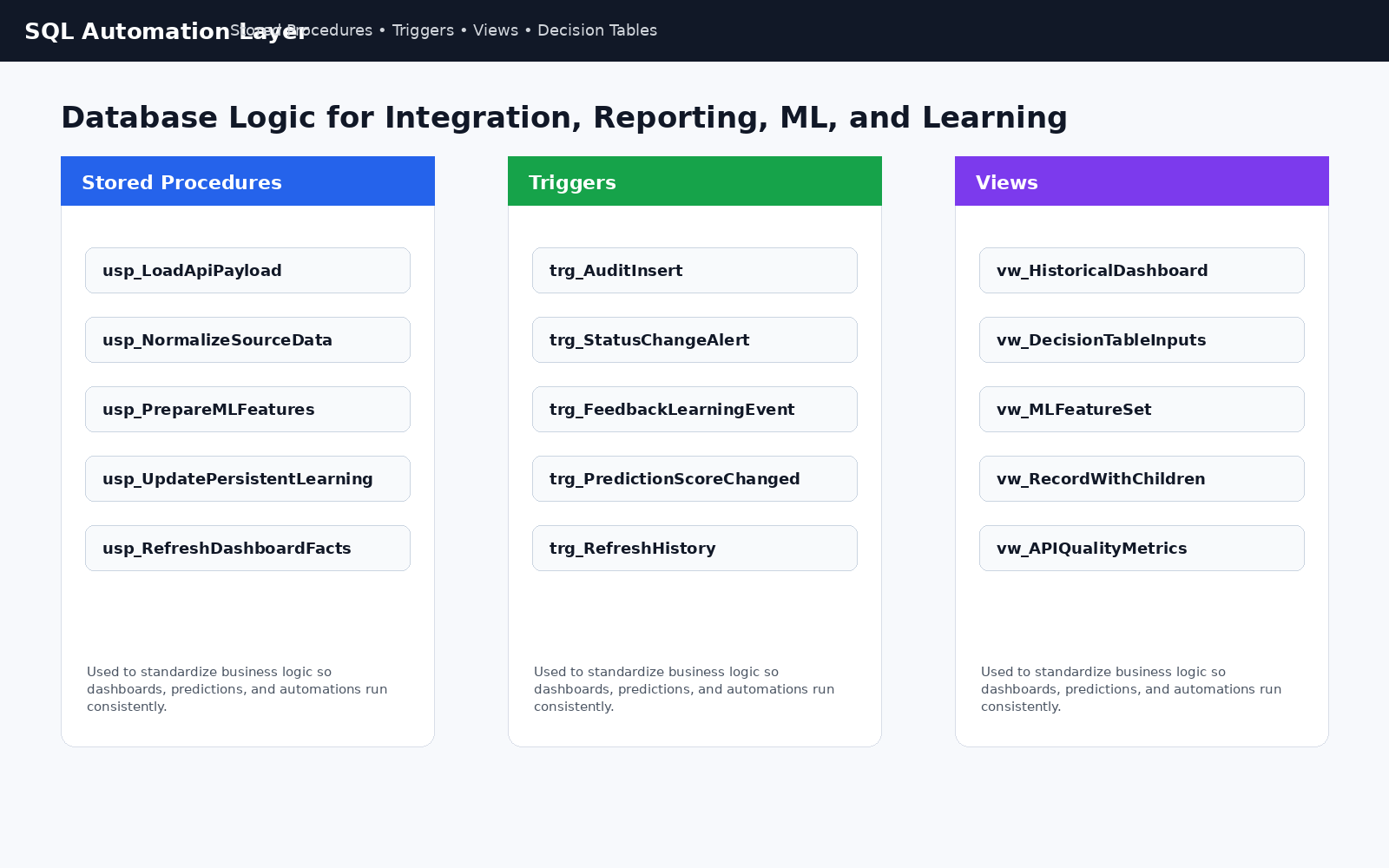
Stored procedures triggers and views screenshot

Stored Procedures, Triggers, and Views

Reusable database logic creates consistent transformation, decision, scoring, audit, and dashboard preparation patterns.
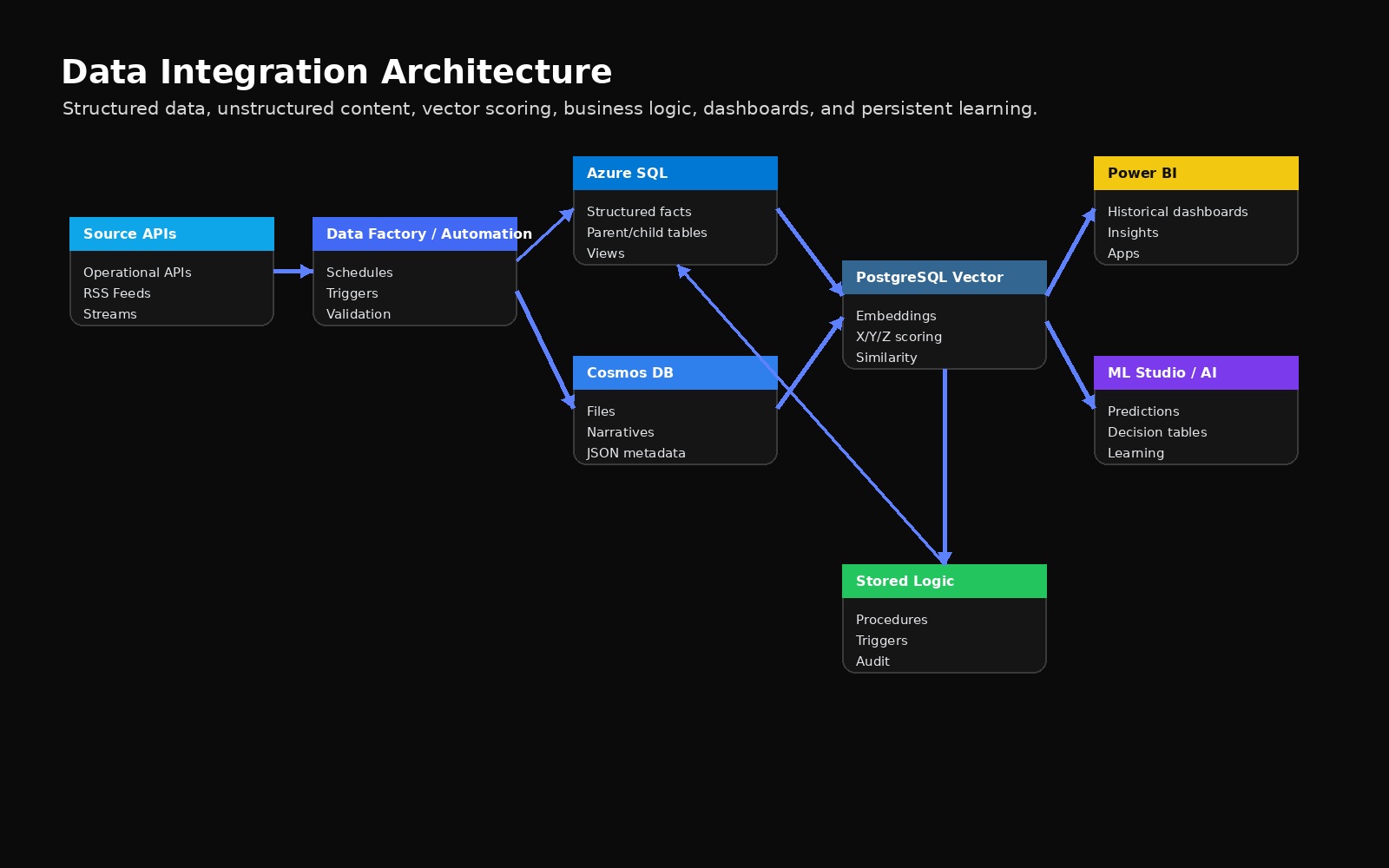
Data integration architecture drawing

Full Data Integration Architecture

Source APIs, automation, Azure SQL, Cosmos, PostgreSQL, Power BI, ML Studio, and stored logic operate as one data foundation.

Architecture Flow

Sources

APIs, files, streams, RSS feeds, forms, feedback, and operational systems.

Ingestion

Data Factory, automations, notebooks, App Services, triggers, and scheduled jobs.

SQL

Structured tables, parent/child records, views, procedures, triggers, and audit logs.

Cosmos

Unstructured JSON, files, streams, RSS, narratives, and metadata.

Postgres

Vectors, x/y/z scoring, embeddings, similarity, confidence, and recommendations.

Outcomes

Dashboards, ML predictions, decision tables, AI agents, and persistent learning.

This pattern creates a governed data foundation where each data type is stored in the right place: structured records in Azure SQL, unstructured content in Cosmos DB, vector intelligence in PostgreSQL, and business logic in stored procedures, triggers, and views. The result is a reusable integration layer for dashboards, predictions, automations, and learning systems.

Business Value

  • More reliable data for dashboards, decision tables, predictions, and reporting.
  • Cleaner separation between structured records, unstructured content, and vector intelligence.
  • Better traceability through parent/child models, audit triggers, history tables, and source metadata.
  • Reusable SQL views and procedures that reduce repeated business logic across tools.
  • Persistent learning patterns that improve recommendations and outcomes over time.

Example Architecture Flow

  • Source APIs, files, feeds, forms, and streams are ingested through secure pipelines or automations.
  • Structured facts and relationships land in Azure SQL.
  • Unstructured content and flexible metadata land in Cosmos DB.
  • Embeddings and similarity scores land in PostgreSQL.
  • Views, triggers, and stored procedures prepare data for Power BI, ML Studio, AI agents, and learning systems.
Back to Capabilities