Evolvement LLC logo

LLMs and AI Agents

Closed-loop intelligent execution systems that turn data into insight, insight into recommendations, recommendations into decisions, decisions into execution, and feedback into better future decisions.

What We Build

  • Retrieval-based AI and AI agents connected to APIs, databases, files, dashboards, automations, and operational applications.
  • Closed-loop intelligent execution systems where every recommendation, decision, execution, feedback item, and learning outcome is recorded.
  • AI agents that retrieve governed data from API Management, query Azure SQL, write to Cosmos DB, update PostgreSQL vectors, and trigger workflows.
  • Human-approved or auto-executed actions using Power Automate, Logic Apps, Teams, Power Apps, App Service, and database writebacks.
  • Traceability layers that show what data was used, what insight was generated, what recommendation was made, who approved it, what executed, and what happened afterward.

Example Use Cases

  • Agent retrieves source-system data through APIM, analyzes SQL history, and recommends an operational action.
  • Agent creates a Logic App or Power Automate workflow when a recurring manual process is detected.
  • Agent writes approved decisions to Azure SQL and stores narrative feedback in Cosmos DB.
  • Agent updates PostgreSQL vectors and learning scores based on outcomes and user feedback.
  • Agent refreshes dashboards, sends Teams alerts, and records the full trace for audit and future learning.

Closed-Loop Intelligent Execution System

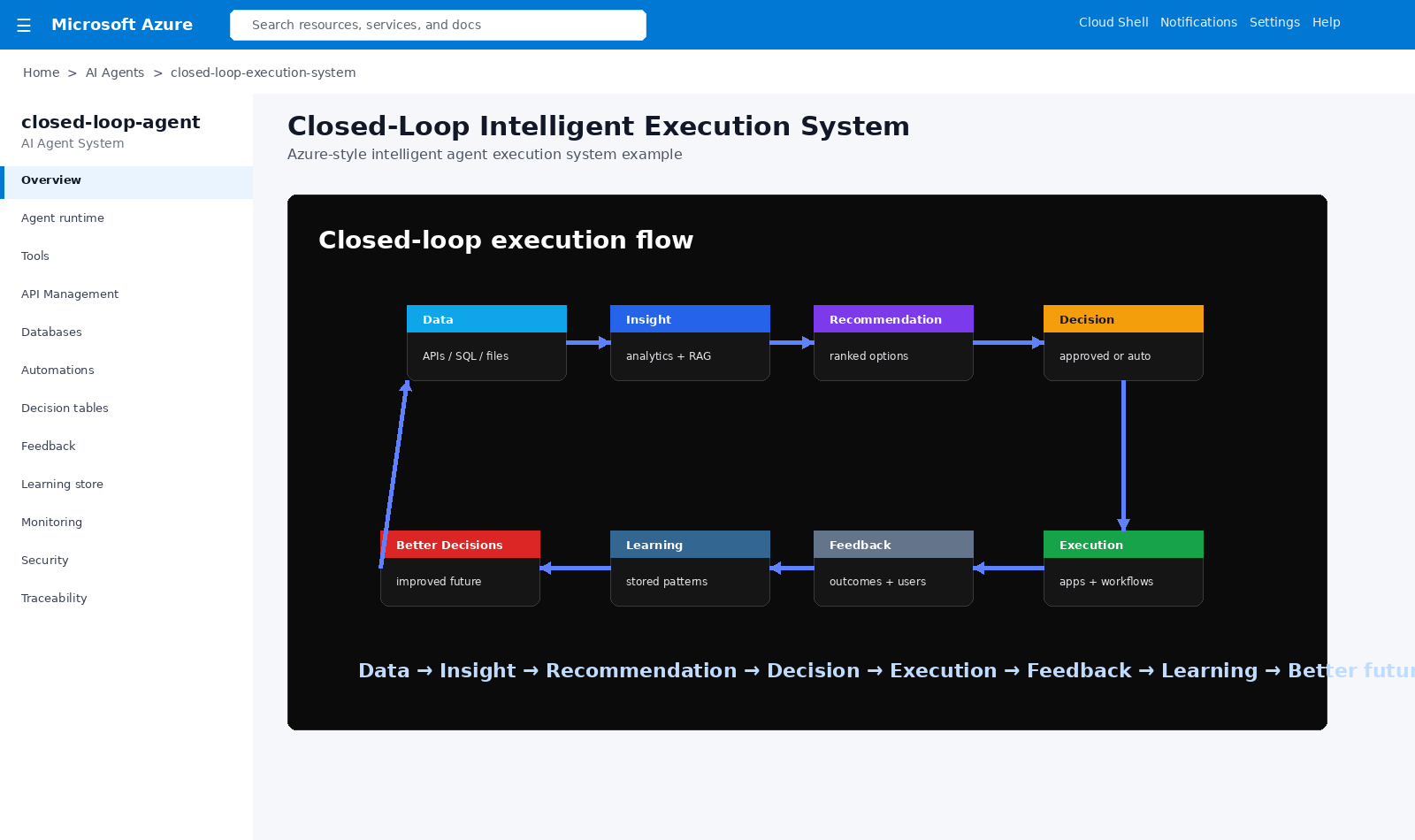
The full loop is: Data → Insight → Recommendation → Decision → Execution → Feedback → Learning → Better future decisions. This turns AI from a passive chat experience into an operational execution system that can support human-in-the-loop approval or policy-controlled automated action.

  • Data → Insight: ingest APIs, SQL, files, feedback, and vector search to understand the current situation.
  • Insight → Recommendation: rank options using business rules, ML outputs, semantic retrieval, and historical outcomes.
  • Recommendation → Decision: apply approval rules, confidence thresholds, policy constraints, and user roles.
  • Decision → Execution: execute automatically or route for approval, then write to apps, databases, automations, or dashboards.
  • Execution → Feedback: capture before/after metrics, success, failure, user notes, and outcome quality.
  • Feedback → Learning: persist learning scores and improve future recommendations.

AI Agents in Use

The screenshots below are Azure-style visuals packaged locally with this page so they render reliably. They show closed-loop execution, tool orchestration, APIM retrieval, database writeback, automation creation, decision tables, feedback learning, and monitoring.
Closed-loop AI execution flow

Closed-Loop Execution Flow

Data becomes insight, insight becomes recommendation, recommendation becomes decision, execution creates feedback, and feedback improves learning.
AI agent tool orchestration

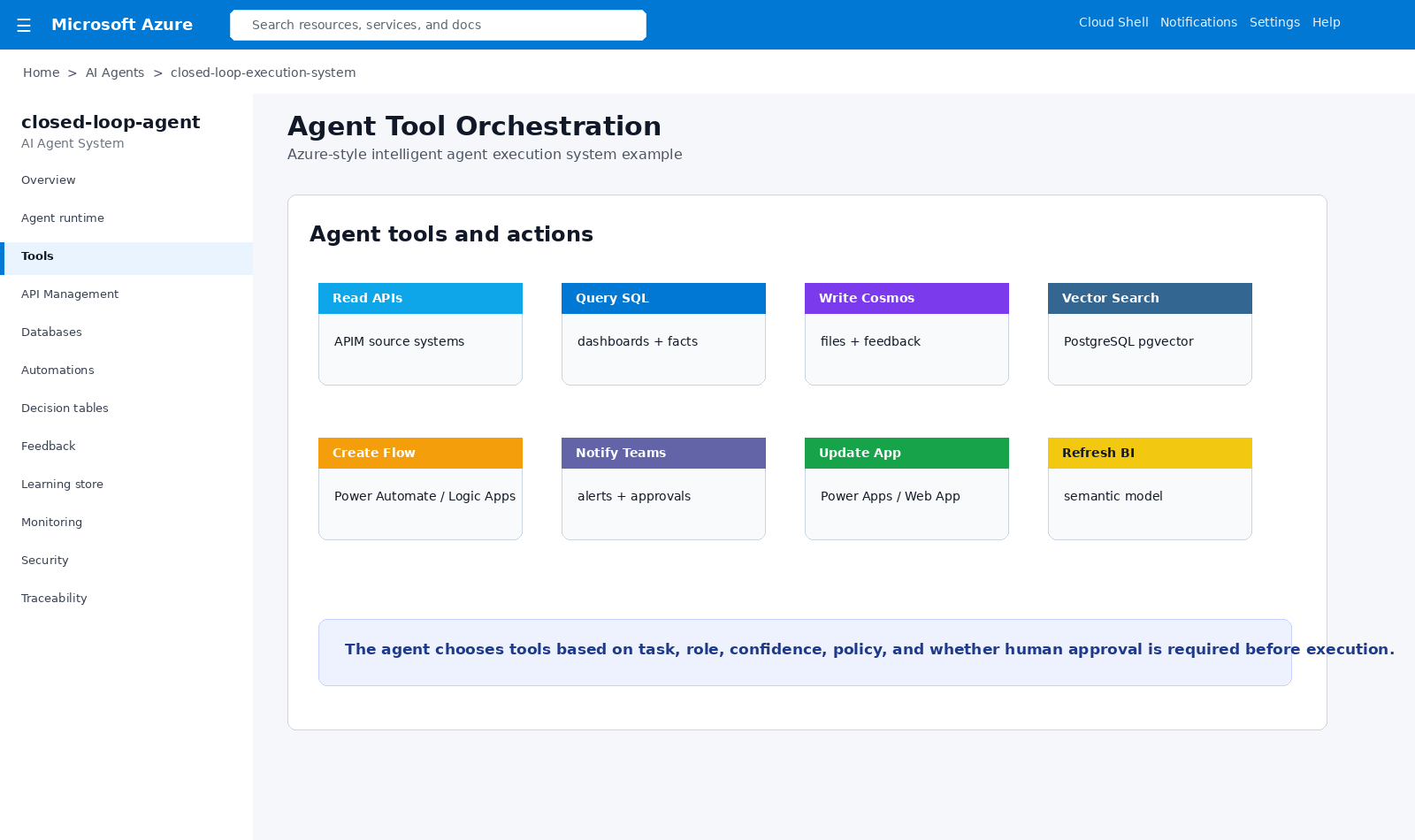
Agent Tool Orchestration

Agents select tools such as APIs, SQL, Cosmos, vectors, automations, Teams, apps, and Power BI refreshes.
AI agent retrieves data from API Management

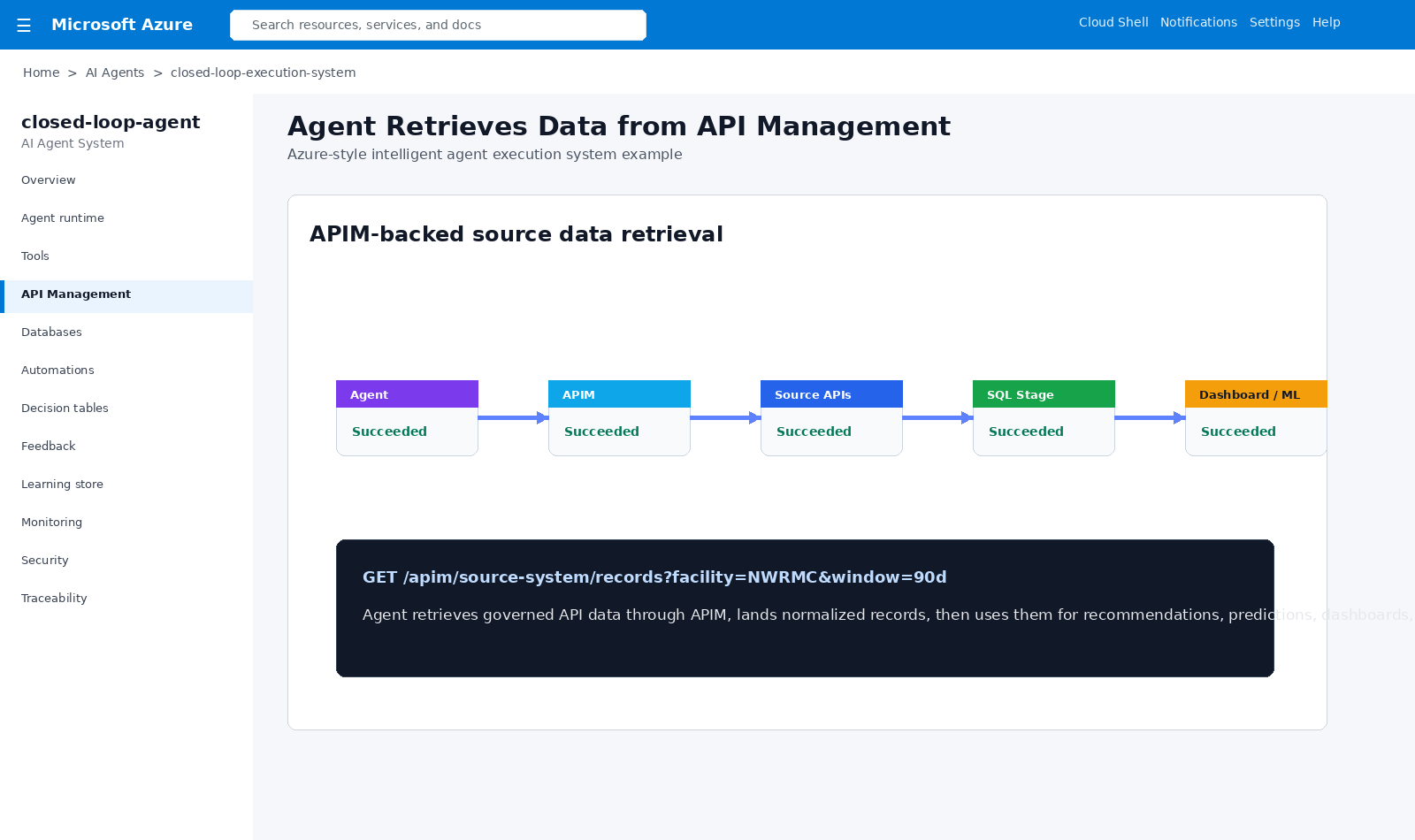
Retrieve Data from API Management

Agent retrieves governed data through APIM, normalizes records, and sends results into SQL, dashboards, ML, and learning stores.
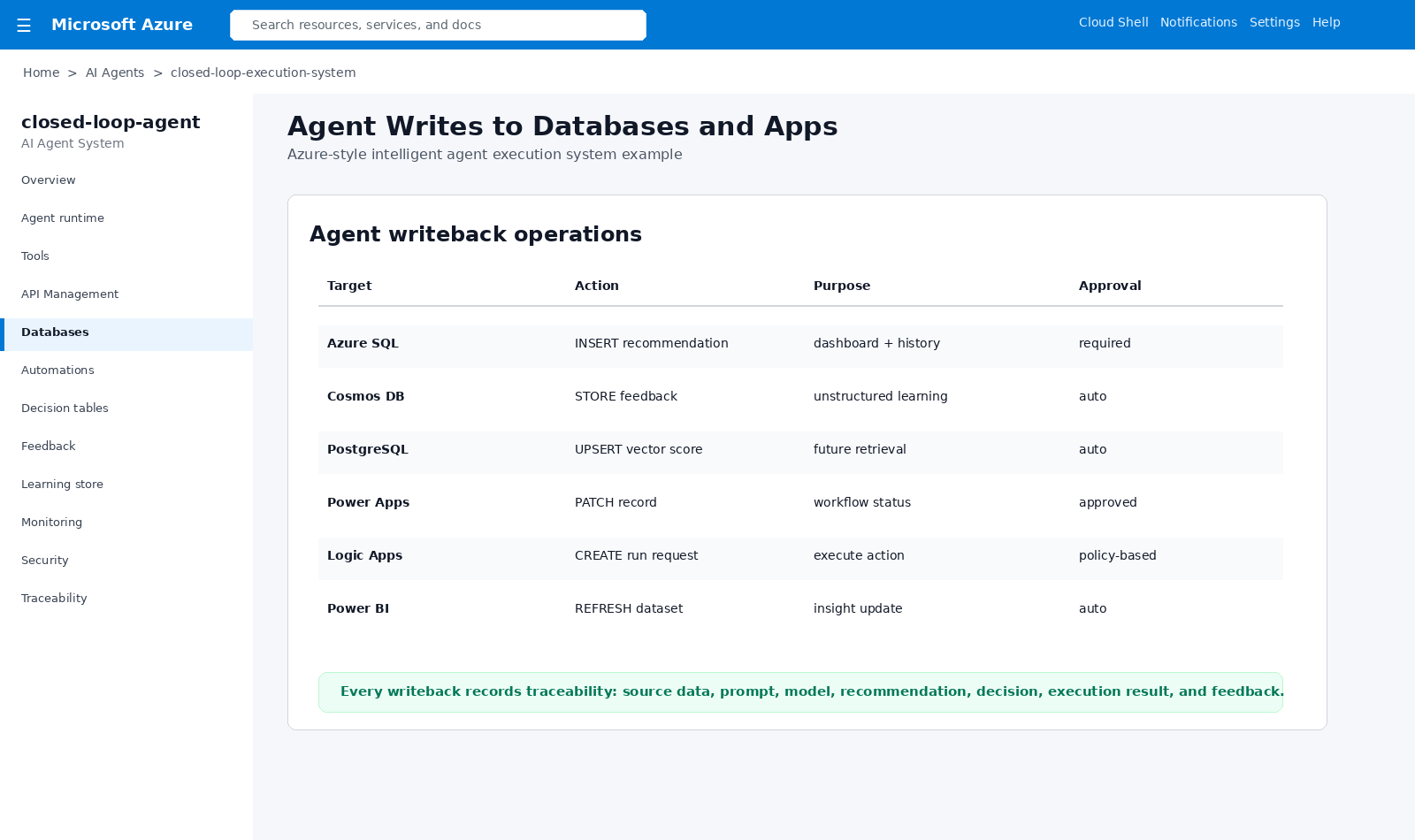
AI agent writes to databases and apps

Write to Apps and Databases

Agent writes recommendations, feedback, vector scores, app updates, automation requests, and Power BI refresh events.
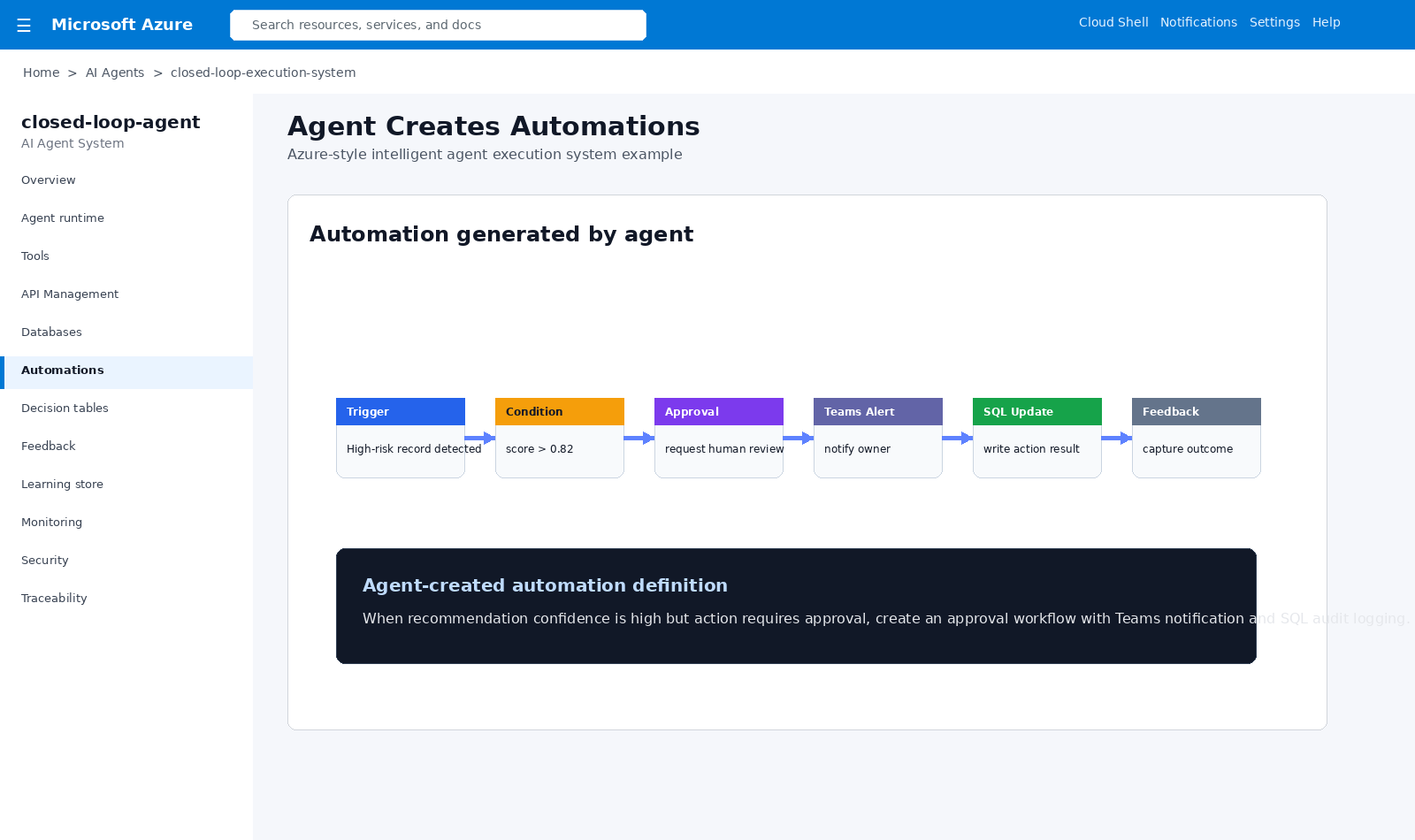
AI agent creates automation

Create Automations

Agent creates or triggers approval flows, Teams alerts, SQL updates, Logic Apps, and feedback capture workflows.
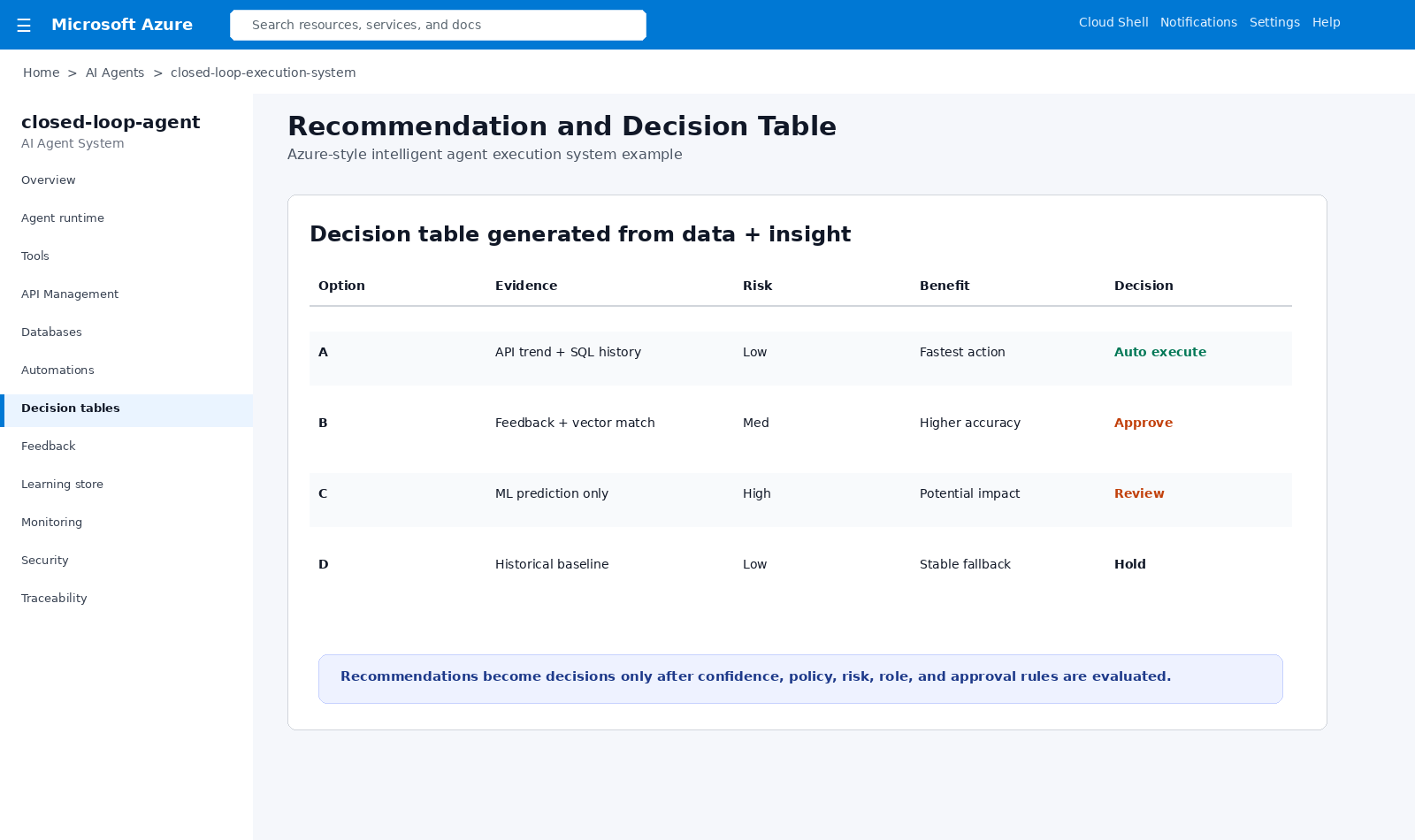
AI agent decision table

Decision Tables

Recommendations are evaluated against evidence, risk, benefit, approval rules, confidence, policy, and execution method.
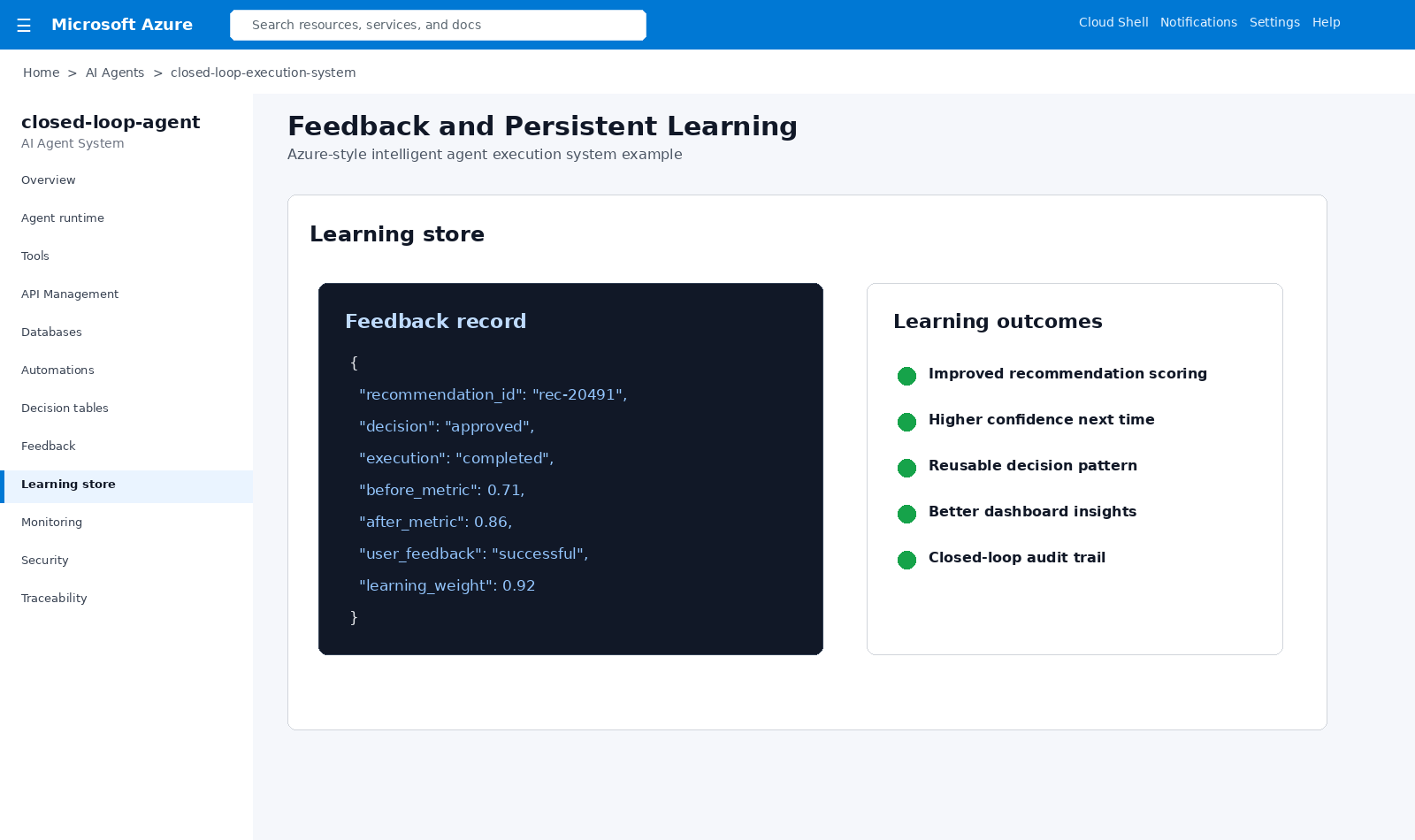
AI feedback and persistent learning

Feedback and Persistent Learning

Before/after outcomes, feedback, execution results, and learning weights improve future decisions.
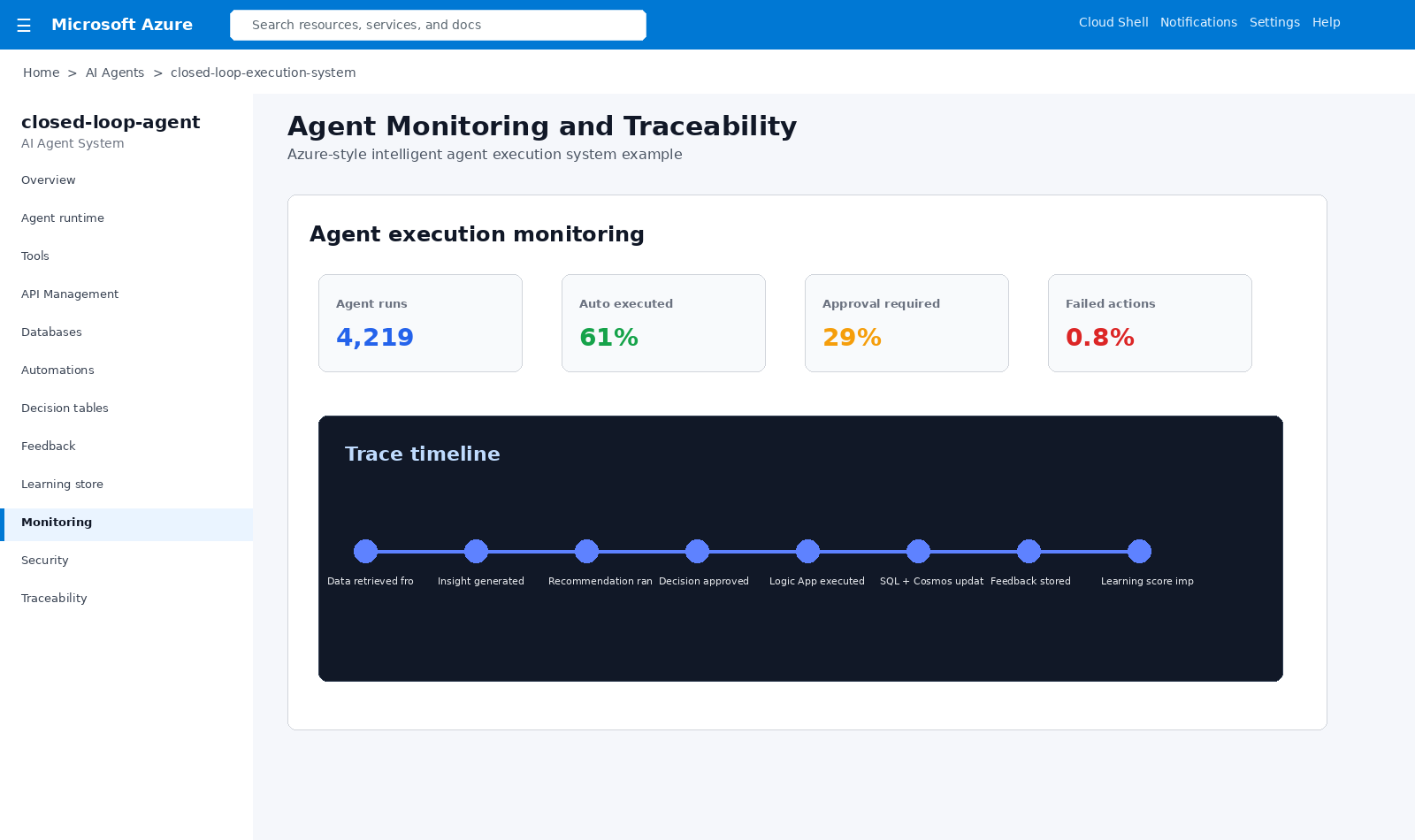
AI agent monitoring traceability

Monitoring and Traceability

Track agent runs, automatic execution, approvals, failures, trace timelines, and learning improvements.

Architecture Flow

Data

APIs, SQL, files, feedback, vectors, dashboards, and operational systems.

Insight

RAG, analytics, ML outputs, semantic retrieval, and historical context.

Recommend

Ranked options, evidence, confidence, risk, and decision table scoring.

Decide

Auto decision, human approval, policy check, or escalation.

Execute

Apps, databases, APIM, Logic Apps, Power Automate, Teams, and dashboards.

Learn

Feedback, before/after metrics, success/failure, learning scores, and better future decisions.

This pattern makes LLMs and AI agents operational. The system does not stop at answering a question. It recommends actions, evaluates decision rules, executes approved changes, records outcomes, and learns from the results.

Business Value

  • Move from passive AI answers to operational execution and measurable outcomes.
  • Connect AI to APIs, databases, dashboards, workflows, apps, and approval processes.
  • Improve trust through traceability, human-in-the-loop approval, decision tables, and audit records.
  • Create persistent learning loops that improve recommendation quality over time.
  • Reduce manual effort by letting agents retrieve, analyze, recommend, execute, and learn.

Example Production Flow

  • Agent retrieves source data through API Management.
  • Agent queries SQL history and PostgreSQL vector context.
  • Agent generates an insight and recommendation with confidence and supporting evidence.
  • Decision table determines whether the action is automatic, approved, held, or escalated.
  • Agent writes to SQL, Cosmos, apps, automations, and dashboards.
  • Feedback and before/after outcomes are stored to improve future recommendations.
Back to Capabilities