
Azure Web Apps and App Service provide secure, scalable hosting for modern web applications, APIs, dashboards, portals, AI front ends, automation back ends, private integrations, and enterprise deployment pipelines.
App Service becomes the managed hosting layer for secure web applications and APIs. It supports rapid deployment while still giving enterprise teams control over networking, identity, environment variables, certificates, logs, scaling, deployment slots, and monitoring.
The screenshots below are Azure portal-style visuals packaged locally with this page so they render reliably. They show overview blades, configuration and environment variables, production versus CI/CD deployment runs, deployment slots, log streaming, private networking, and metrics.
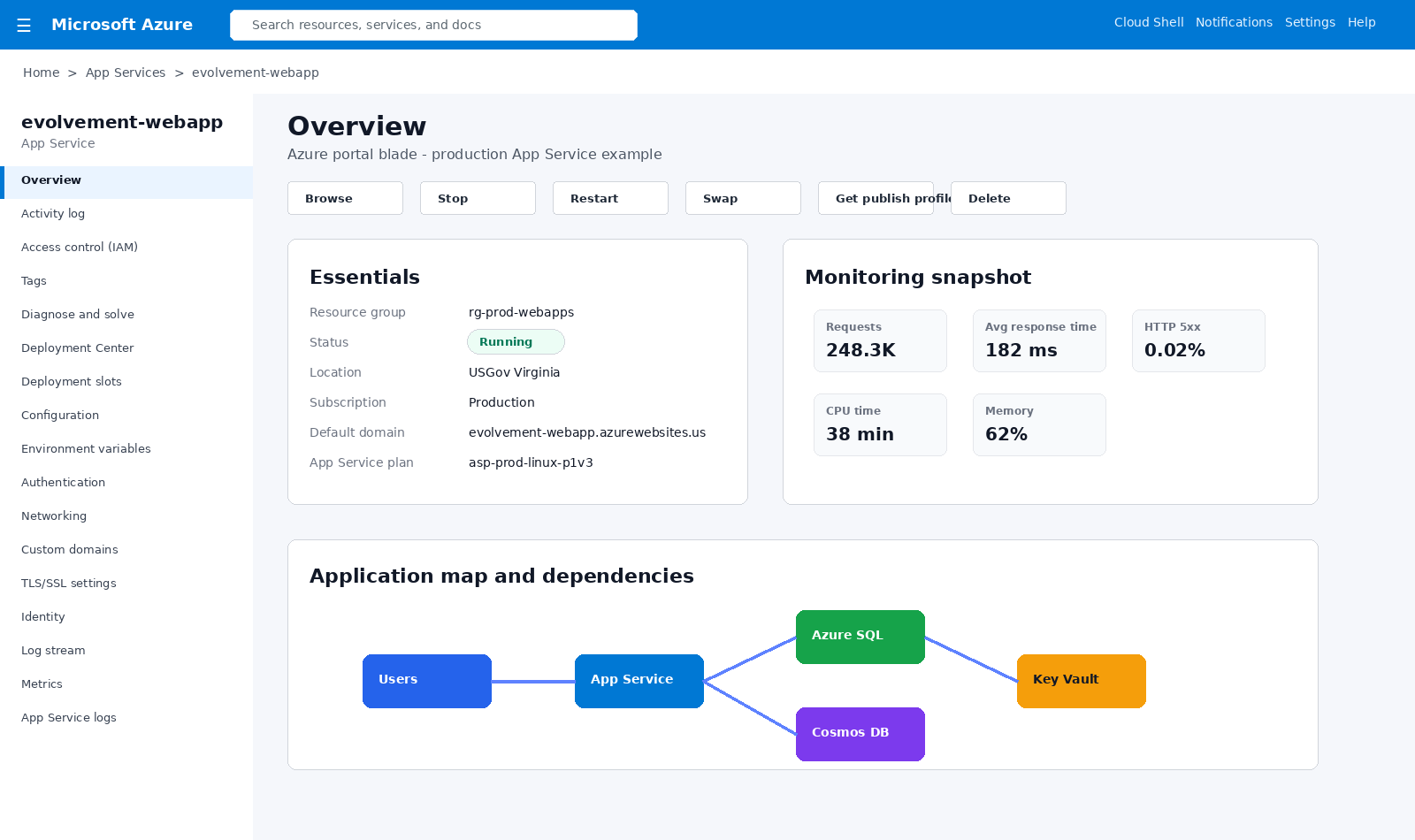
Production App Service overview showing runtime status, resource details, monitoring snapshot, and dependency map.
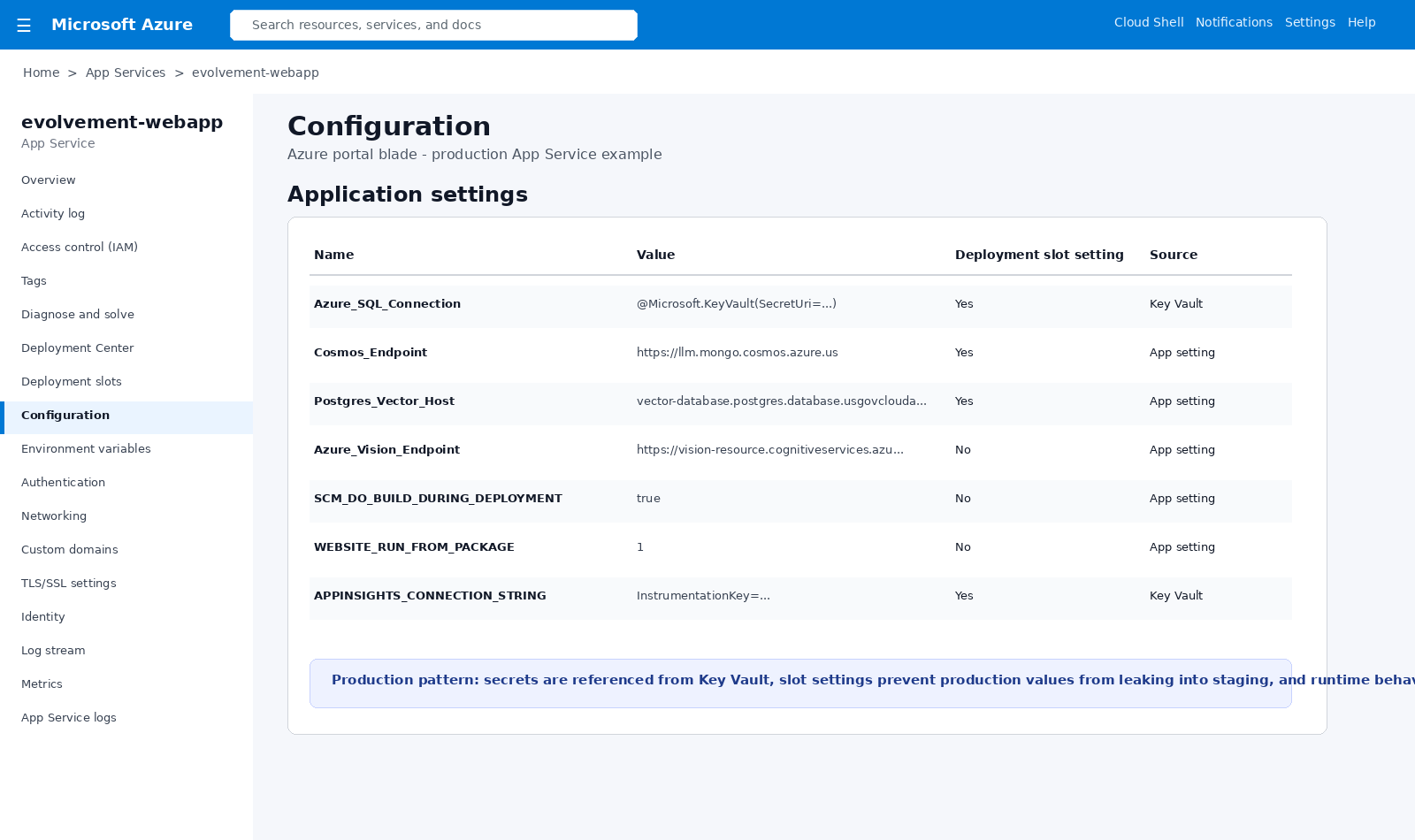
Application settings, environment variables, Key Vault references, slot settings, and secure runtime configuration.
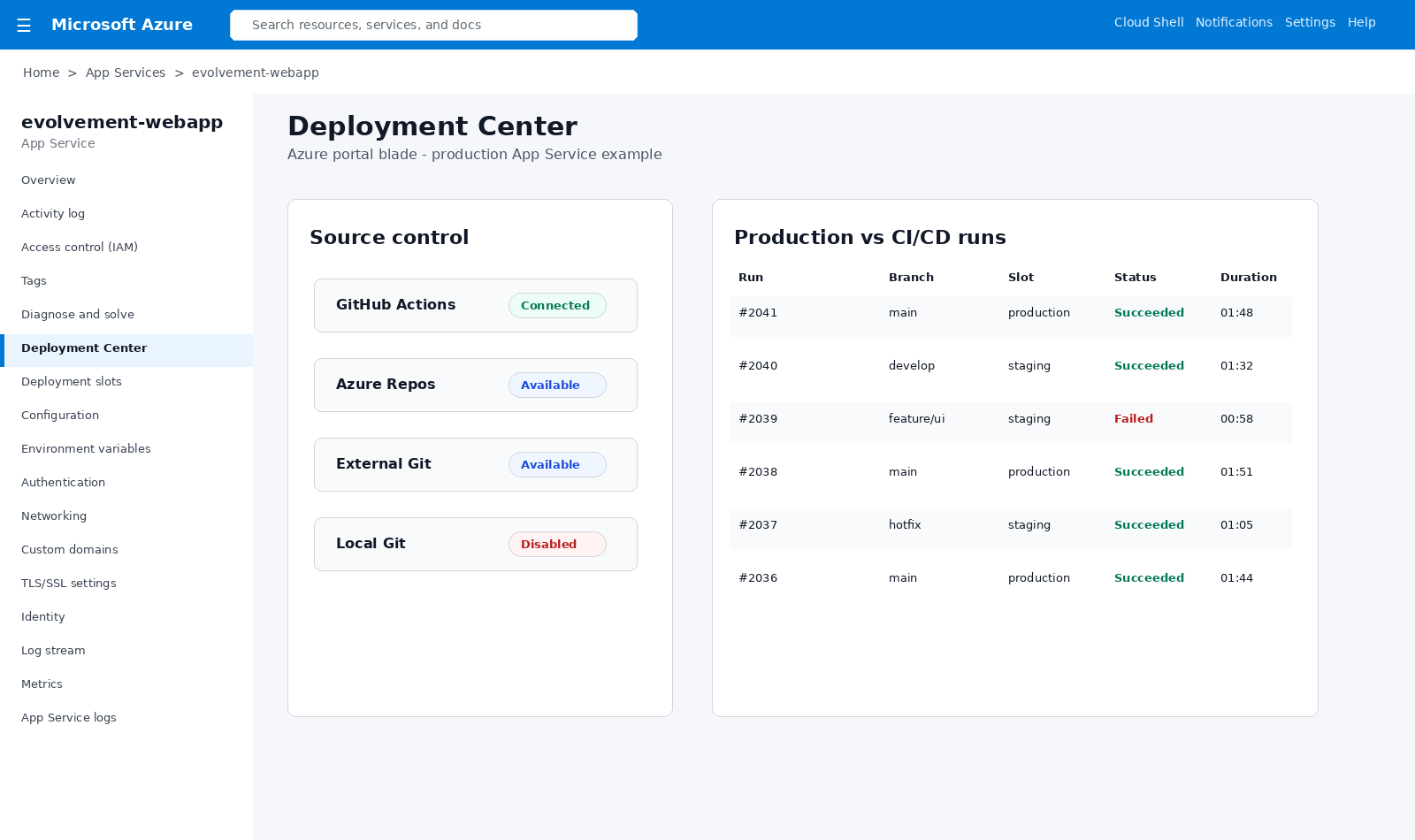
CI/CD run history comparing main, develop, feature, staging, production, failed runs, and successful releases.
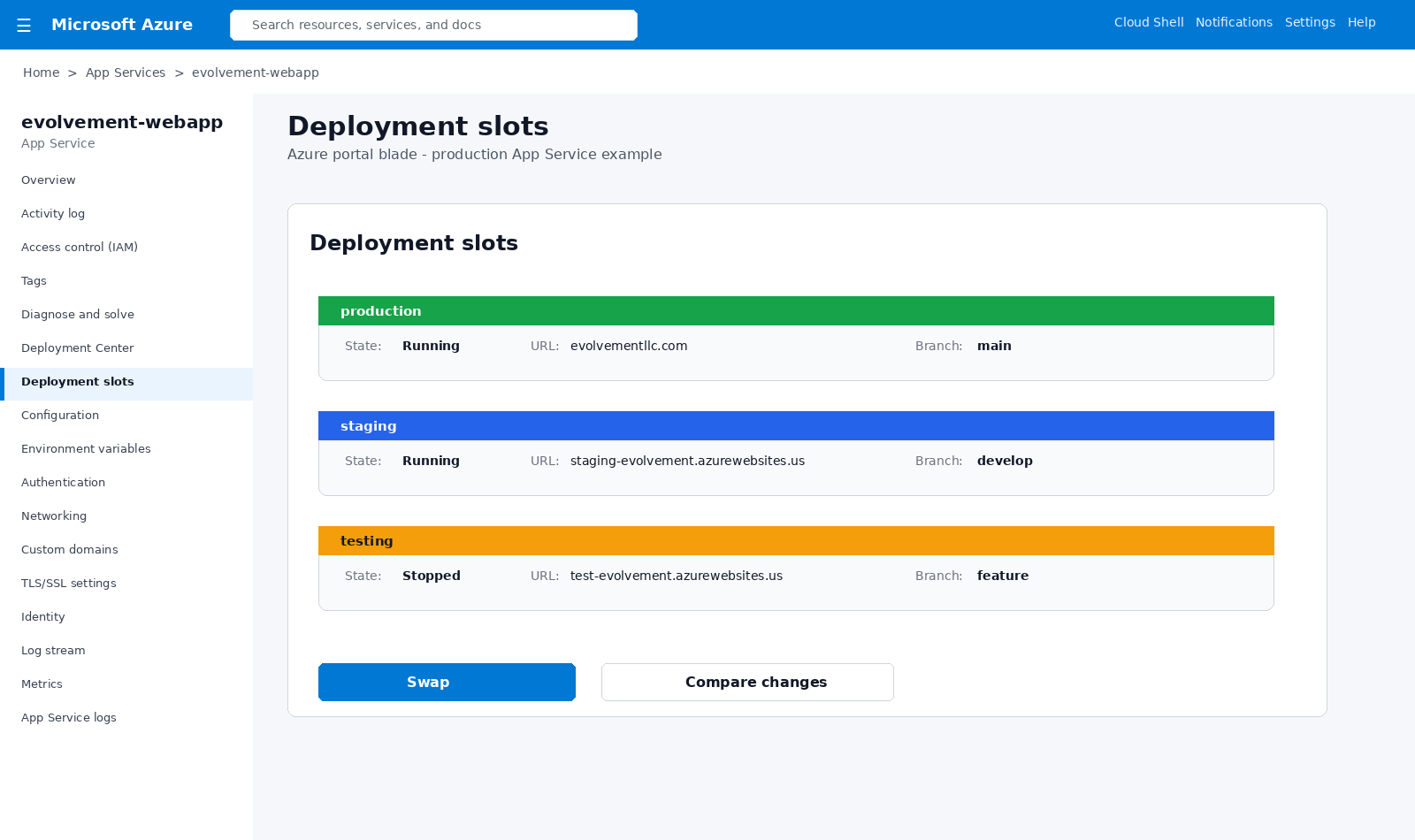
Production, staging, and testing slots support validation, staged releases, hotfixes, and safe production swaps.
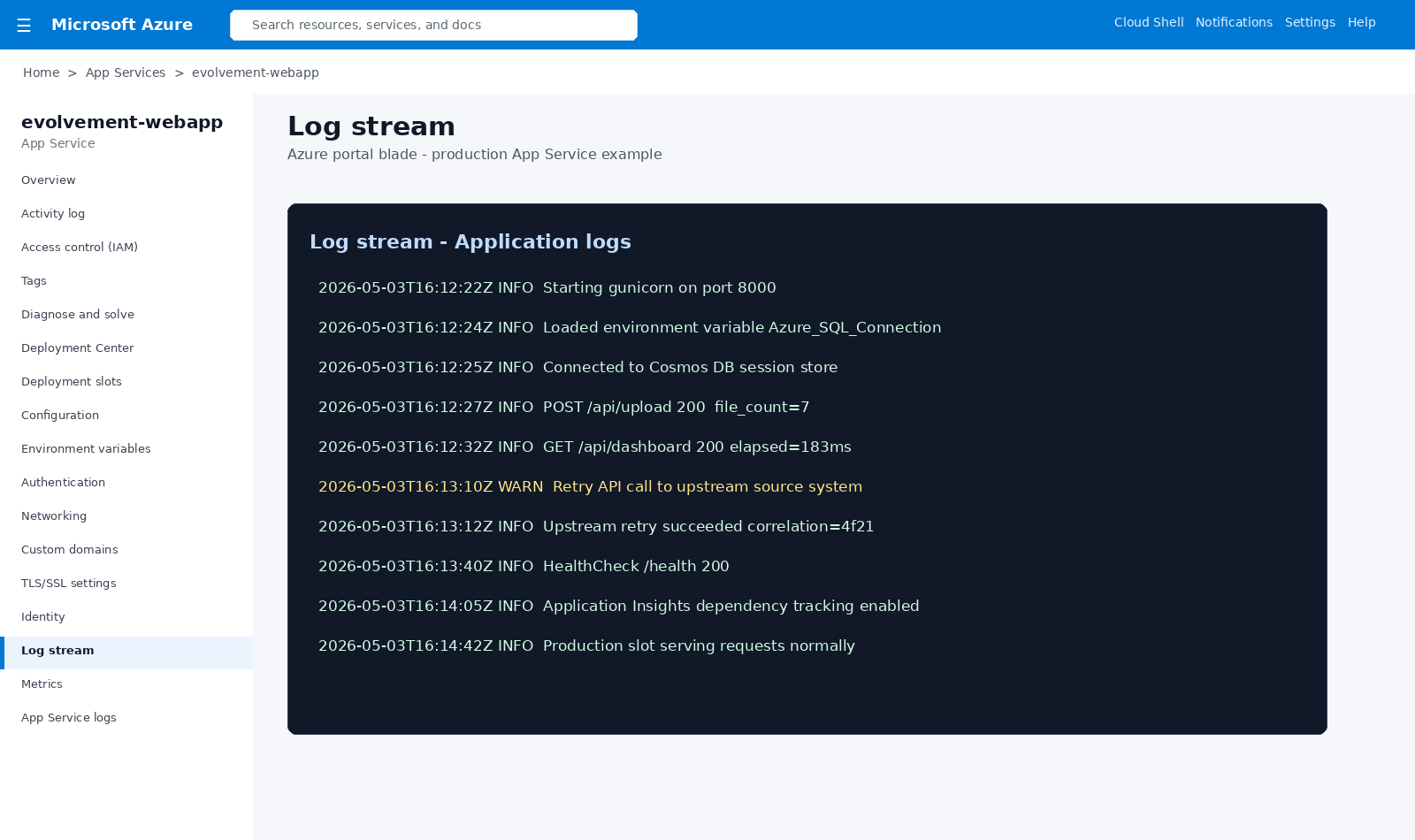
Live application logs show startup, environment variables, upstream retries, requests, dependencies, and health checks.
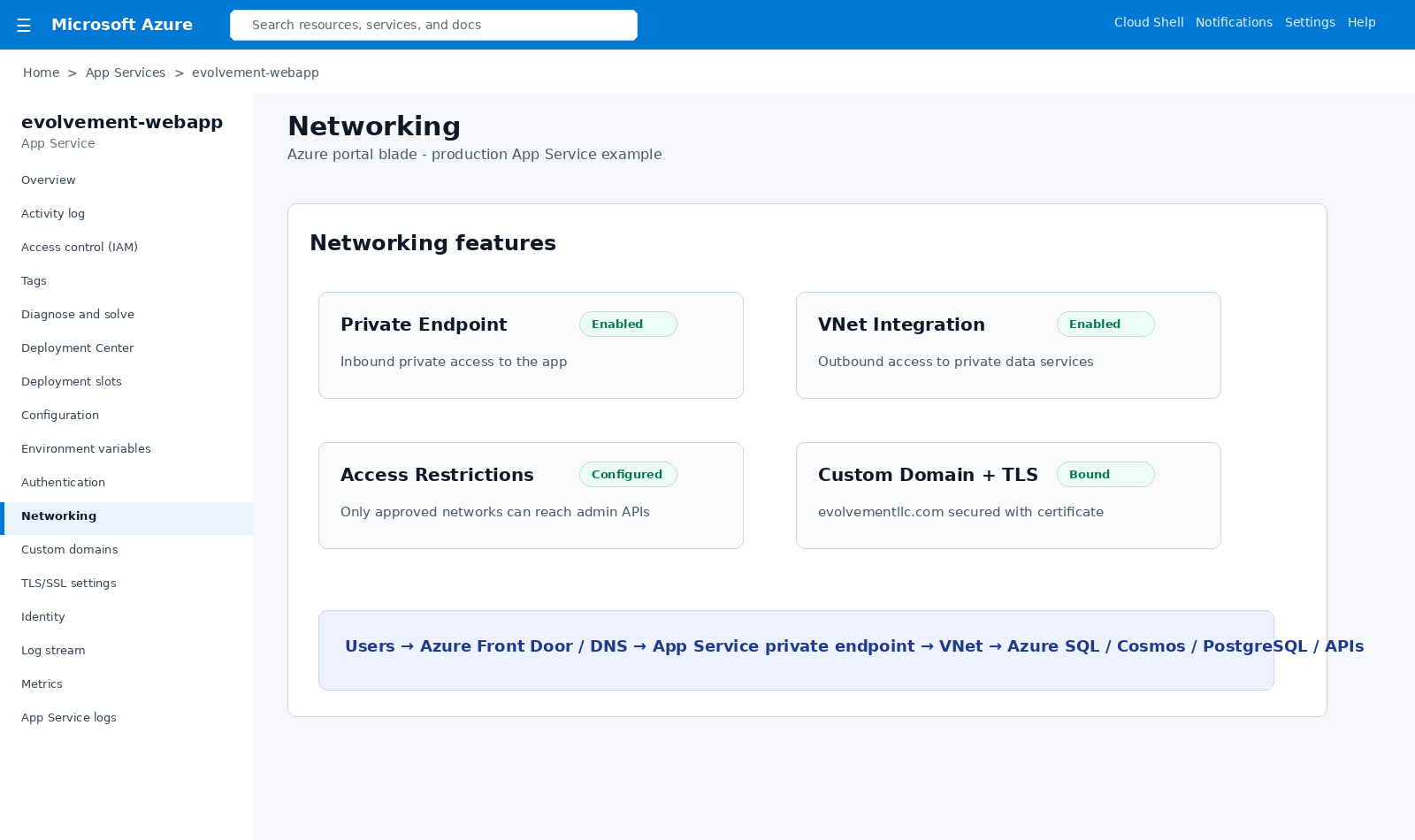
Private endpoints, VNet integration, access restrictions, custom domains, and TLS protect application traffic.
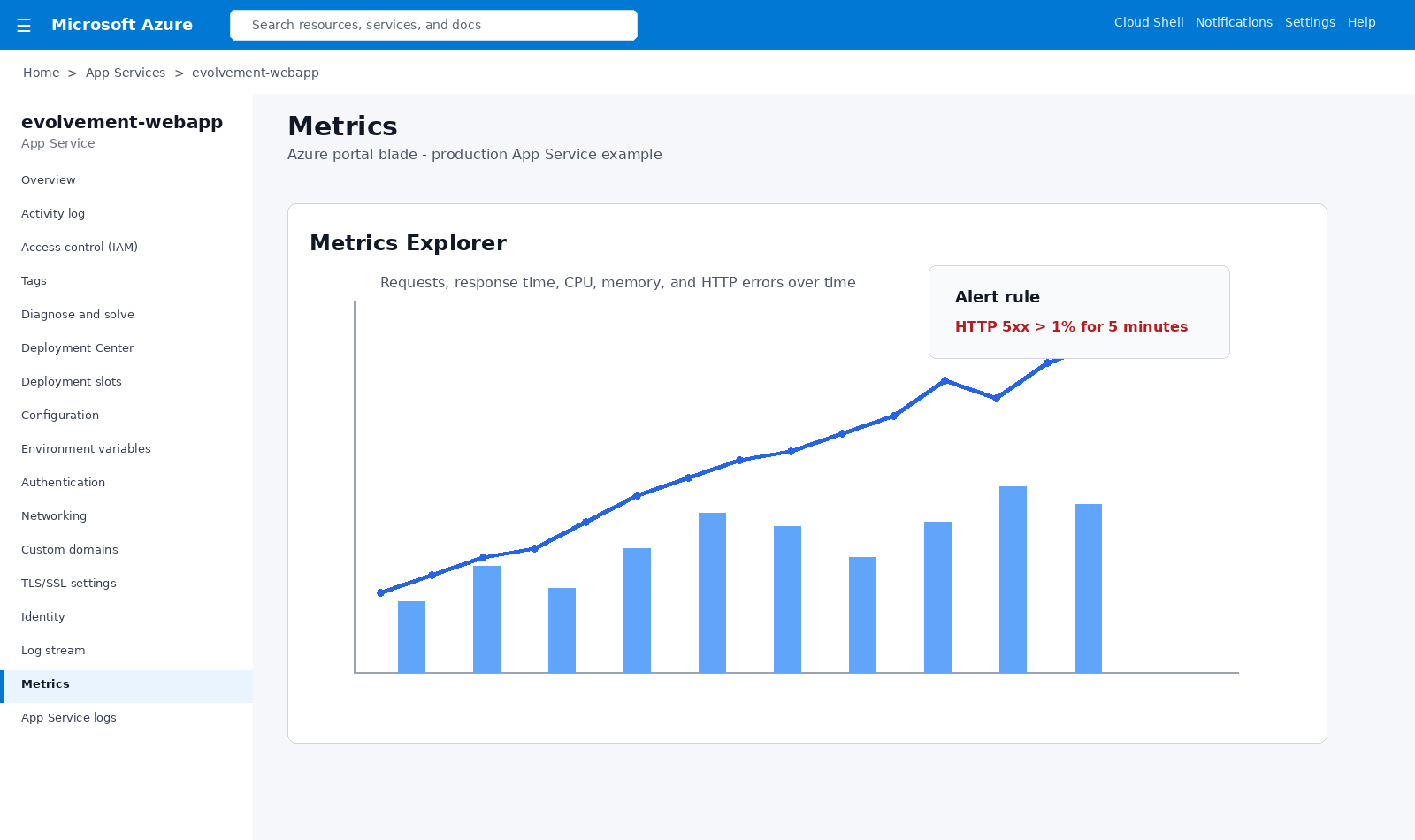
Metrics Explorer tracks requests, response time, CPU, memory, HTTP failures, alerts, and health trends.
Internal teams, customers, analysts, approvers, and administrators.
Portal, dashboard, API, AI interface, intake form, or operations tool.
Managed identity, Entra ID, app roles, secrets, and Key Vault.
Azure SQL, Cosmos DB, PostgreSQL, storage, APIs, and lakehouse sources.
GitHub, Azure DevOps, staging slots, CI/CD runs, and production swaps.
Logs, metrics, alerts, diagnostics, scaling, health checks, and rollback.
This pattern makes App Service the secure application layer that users interact with while backend systems remain governed through identity, private networking, managed configuration, APIs, deployment slots, and monitored release practices.